
Nine water storage containers compared, from 5-gallon cans and 55-gallon drums to a 550-gallon tank, with CDC guidance on how much water to store.
Our product recommendations come from independent research based on certifications, maker specs and published test data. If we’ve tested a product hands-on, the review says so. Some links are affiliate links; if you buy, we may earn a commission at no cost to you. Read our affiliate disclaimer here.
The short answer: For most homes, the best water storage container is a food-grade 55-gallon drum such as the Augason Farms 55-gallon drum (~$160). One drum covers up to three people for two weeks at CDC's 1 gallon per person per day. Add a carry-size jug such as the Igloo 6-gallon for evacuations. For more than 110 gallons, a WaterPrepared upright tank fits indoors, and a Norwesco 550-gallon tank or an IBC tote works outdoors.
How much to store: CDC recommends at least 1 gallon per person per day for at least 3 days, and a 2-week supply if you can manage it (CDC). For a family of four, that is 12 gallons at minimum and 56 gallons for two weeks.
| Container | Best for | Holds | Size | Food-contact claim (source) | Price | Check price |
|---|---|---|---|---|---|---|
| Augason Farms 55-gal drum | Best 55-gallon drum | 55 gal | 23 x 35 in | Food-grade, BPA-free (listing) | ~$160 | Amazon |
| Igloo 6-gal jug | Best portable jug | 6 gal | 14 x 8 x 21 in | BPA-free (Zoro listing) | ~$38 | Amazon |
| Scepter 5-gal can | Best rugged can | 5 gal | 19 x 14 x 7 in | Food-grade, BPA-free (maker) | ~$59 | Zoro |
| AquaBrick 2-pack | Best stackable | 2 x 3 gal | 18 x 9 x 6 in each | BPA-free (maker) | ~$75 | Sagan Life |
| BayTec 15-gal drum | Best 15-gallon barrel | 15 gal | 14 x 26 in | Food-grade resin (seller) | ~$96 | Amazon |
| WaterPrepared 35-gal | Best compact tank | 35 gal | 30 x 20 x 23 in | Food-grade, BPA-free (maker) | ~$240 | Tractor Supply |
| WaterPrepared 160-gal | Best large indoor tank | 160 gal | 36 x 29 x 45 in | Food-grade, BPA-free (maker) | ~$750 | Tractor Supply |
| Norwesco 550-gal | Best outdoor bulk tank | 550 gal | 67 x 44 in | FDA-spec resin (maker) | ~$760 | Northern Tool |
| 275-gal IBC tote | Best budget bulk tank | 275 gal | 48 x 40 x 45 in | FDA-approved HDPE (seller) | ~$420 | Tractor Supply |
How We Chose These Containers
Our methodology is research-based. We did not test these containers ourselves. For each pick, we read the retailer listing on November 8, 2026, plus the maker's product page where we could find one. Every pick could be ordered that day, though the AquaBrick was on backorder until about November 20. We list the size, price and any food-contact claim, and we say whether the maker or the seller makes it.
We chose one container per job, such as an indoor drum, an evacuation jug or an outdoor tank. We dropped products we could not buy from a reliable seller. The storage advice comes from CDC, EPA, FEMA/Ready.gov and university extension guidance, linked where we use it. If you spot an error, please contact us. To learn who we are, read more about us.
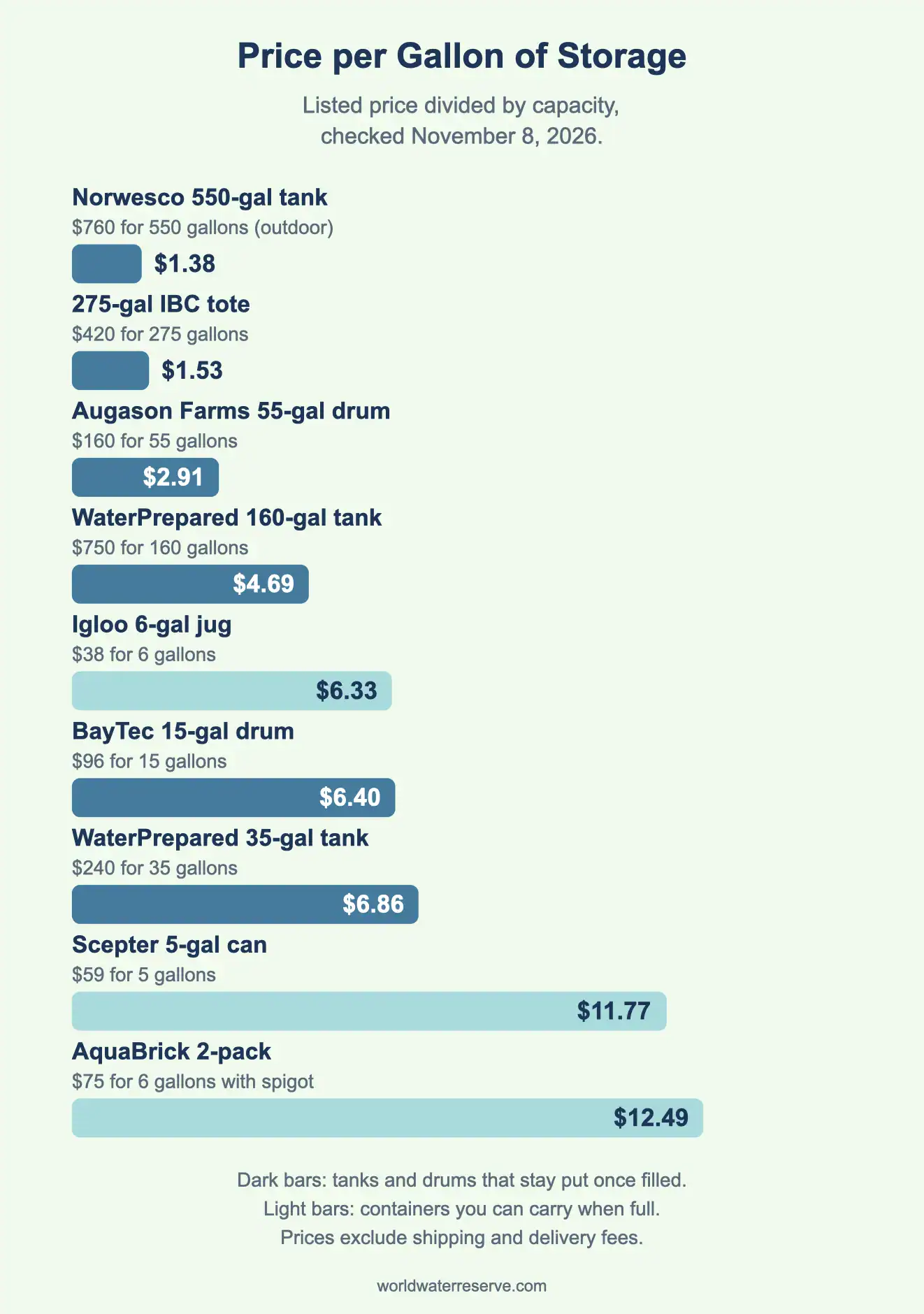
Price per gallon of storage: listed price divided by capacity, November 8, 2026. Prices exclude shipping. The Norwesco 550 and the IBC tote cost the least per gallon; the Scepter can and the AquaBrick 2-pack cost the most.
Best 55-Gallon Drum: Augason Farms 55-Gallon Water Drum
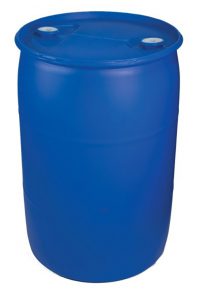
A 55-gallon drum is a common way to store a family's water indoors. The Augason Farms drum is blue, about 23 inches wide and 35 inches tall, and weighs 18 pounds empty. The listing describes it as BPA-free, food-grade polyethylene with two built-in plug fittings.
- Price: ~$160 on Amazon, sold by a third-party seller that ships in 9 to 10 days (November 8, 2026)
- Full weight: about 480 pounds, so fill it where it will stay
- You also need: a drum pump or siphon and a bung wrench, which are sold separately
Pros: 55 gallons in a 23-inch-wide footprint; opaque blue plastic blocks light.
Cons: slow shipping from the current seller; too heavy to move once full.
Need it sooner? The Bushman 55-gallon drum (~$220) is a similar blue drum. Its listing says it is approved for FDA- and USDA-compliant food-grade items, and it was due within a week of ordering on November 8.
Best Portable Jug: Igloo 6-Gallon Water Container
A portable jug is what you grab if you have to leave home. The Igloo 6-gallon container is blue plastic that Zoro's listing calls BPA-free. It is about 14 by 8 by 21 inches, with molded top and side handles. It has a screw-on flexible spout and a pull-up vent for a smooth pour. The listing says it is made in the United States.
- Price: ~$38 on Amazon from a third-party seller, or ~$28 at Zoro (November 8, 2026)
- Full weight: about 52 pounds
Pros: compact at about 14 by 8 by 21 inches; screw-on flexible spout and pull-up vent, per the Zoro listing.
Cons: neither retailer listing makes a food-grade or FDA claim, and only Zoro's says BPA-free; 6 gallons is heavy to carry far.
Why not the Aqua-Tainer? The Reliance Aqua-Tainer 7-gallon is a common pick for this job, but Reliance lists every size as sold out ("Back in Stock Soon") as of November 8, 2026. We will review it again when it returns.
Best Rugged Can: Scepter 5-Gallon Military Water Container
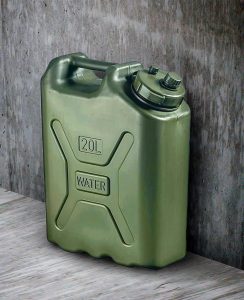
The Scepter can is a jerry can built to the U.S. military specification MIL-DTL-43613E, according to its Zoro listing. Scepter describes it as food-grade and BPA-free. It measures about 19 by 14 by 7 inches.
- Price: ~$59 at Zoro (November 8, 2026)
- Full weight: about 44 pounds
Pros: built to a military spec, and Scepter calls it "tough enough for soldiers"; slim shape stores in tight spaces.
Cons: no built-in spigot; at about $11.77 a gallon, it costs more per gallon than every pick except the AquaBrick 2-pack.
Is it for you? Choose it if your water may ride in a truck bed or get handled roughly during an evacuation.
Alternative: the Wavian 5-gallon can (~$52) is a UV-stabilized, food-grade jerry can, and it comes in blue.
Best Stackable: AquaBrick 3-Gallon Container
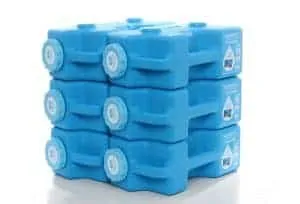
The AquaBrick from Sagan Life is a flat, 3-gallon container that stacks like a brick. Each one is about 18 by 9 by 6 inches and weighs 2.4 pounds empty. Sagan describes the plastic as BPA-free high-density polyethylene. Grooves in the sides hold straps, so a stack can be tied down. One brick covers one person for CDC's 3-day minimum.
- Price: ~$75 for two bricks and a spigot; ~$186 for six and a spigot
- Availability: on backorder until about November 20, 2026, per Sagan, and still orderable
- Full weight: about 27 pounds per brick
Pros: fits under beds and in closets; each person can carry their own; also stores dry food.
Cons: no built-in spigot on each brick; the 2-pack has the highest price per gallon here (about $12.49), and the 6-pack runs about $10.33.
Best 15-Gallon Barrel: BayTec 15-Gallon Blue Drum
A 15-gallon drum suits an apartment or a small household. The BayTec drum is opaque blue, about 14 inches wide and 26 inches tall, with a closed top, a 2-inch and a 3/4-inch opening, and gallon marks. The seller describes the plastic as food-grade compliant resin.
- Price: ~$96 on Amazon, sold by a third-party seller (November 8, 2026)
- Full weight: about 135 pounds
Pros: one person's 2-week supply in a closet-size footprint; blue blocks light.
Cons: the food-grade claim is the seller's; too heavy to carry once full.
Best Compact Tank: WaterPrepared 35-Gallon Horizontal Utility Tank
This low, wide tank suits a closet, a garage floor or an apartment. It holds 35 gallons and measures about 30 by 20 inches and 23 inches tall. WaterPrepared says it is BPA-free, FDA/NSF-approved polyethylene, made in the USA. Its spigot connects to a garden hose, and two strapping points help hold it in place.
- Price: ~$240 at Tractor Supply (November 8, 2026)
- Full weight: about 310 pounds
- Warranty: 1 year
Pros: two people's 2-week supply in one container; the spigot takes a garden hose for filling jugs.
Cons: WaterPrepared does not name the NSF standard; costs more per gallon than a 55-gallon drum.
➔ Check price at Tractor Supply
Best Large Indoor Tank: WaterPrepared 160-Gallon Tank
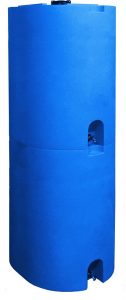
The WaterPrepared 160-gallon tank stands about 45 inches tall and 29 inches wide. It has two spigots that connect to a garden hose, and a second tank can stack on top. The maker describes it as BPA-free, FDA/NSF-approved polyethylene, made in the USA.
- Price: ~$750 at Tractor Supply (online only); the maker sells it for ~$699 (November 8, 2026)
- Full weight: about 1,380 pounds, so place it on a concrete slab, such as a garage or basement floor. Two stacked tanks weigh about 2,760 pounds.
- Warranty: 1 year
Pros: holds about what three 55-gallon drums hold, in less floor space; hose spigots make it easy to draw water.
Cons: needs a concrete slab; the 3/4-inch outlet drains slower than a 2-inch valve.
➔ Check price at Tractor Supply
Best Outdoor Bulk Tank: Norwesco 550-Gallon Water Tank
For a homestead or a rural property, an outdoor tank holds months of emergency water: 550 gallons covers a family of four for over four months at CDC's 1 gallon per person per day (CDC). The Norwesco 550-gallon tank is black, UV-stabilized polyethylene, about 67 inches wide and 44 inches tall, with a 16-inch lid. Norwesco says its water tanks use resins that meet FDA specifications for potable water and carry NSF approval where applicable.
- Price: ~$760 at Northern Tool (November 8, 2026)
- Fittings: a 2-inch outlet at the bottom and a 1.5-inch fitting near the top
- Warranty: 3 years; made in the USA
Pros: lowest price per gallon here; black plastic blocks light, which limits algae.
Cons: needs a firm, level base that supports the whole bottom, since it weighs over 4,500 pounds full; you need a pump or gravity feed to use it.
Collecting rainwater instead? See our rain barrel picks.
➔ Check price at Northern Tool
Best Budget Bulk Tank: 275-Gallon FDA-Approved IBC Tote
An IBC tote is a large plastic tank held inside a metal cage, built for shipping liquids. This one is new, not reused, and Tractor Supply describes it as FDA-approved, 100% virgin-resin HDPE meant for water only (Tractor Supply). It holds 275 gallons, measures about 48 by 40 by 45 inches, and drains through a 2-inch valve.
- Price: ~$420 at Tractor Supply (November 8, 2026)
- Full weight: about 2,400 pounds
Pros: about 275 gallons for less than the price of three drums; the metal cage protects the tank.
Cons: the white tank lets light in, so cover it or keep it indoors to limit algae; raise it on blocks to reach the valve.
Is it for you? Choose it if you want 275 gallons for about $420, less upfront than the WaterPrepared 160 or the Norwesco 550. Keep it in a garage or barn, or cover it outdoors.
➔ Check price at Tractor Supply
Short-Term Option: A Bathtub Liner
If a storm is forecast, a bathtub liner such as the waterBOB lets you store about 100 gallons in your tub. Its maker lists it as out of stock until early December 2026, so we will add a link when it returns.
Are These Containers BPA-Free and Food-Grade?
A food-grade container is one made from materials approved for contact with food or drinking water. CDC recommends FDA-approved food-grade containers for stored water, because they will not transfer toxic substances into it (CDC). If you are not sure a container is food-grade, CDC says to ask its maker.
The recycling number on the bottom does not prove food safety. It only names the plastic. Most drums and jugs on this list are HDPE (#2), per their listings. Polypropylene (#5) tubs are also food-safe, and 3- and 5-gallon water jugs are often #7 (Utah State University Extension). Buy containers sold for drinking water instead.
Here is what each maker or seller says about our picks:
- BPA-free and food-grade: Augason Farms drum (listing), Scepter (maker), Wavian (listing), WaterPrepared 35 and 160 (maker).
- BPA-free only: Igloo 6-gallon (Zoro listing), AquaBrick (maker).
- FDA-specification or FDA-approved resin: Norwesco 550 (maker), IBC tote (seller).
- Food-grade resin only: BayTec drum (seller).
How Much Water Should You Store?
Store at least 1 gallon per person per day for drinking, cooking and hygiene, for at least 3 days (CDC). A normally active person needs about three-quarters of a gallon of fluids a day (Ready.gov). Store more for children, nursing mothers, sick people, pets and hot climates.
For a 2-week supply, multiply the number of people by 14 gallons. For example, a family of four needs 56 gallons, which is one 55-gallon drum plus a jug.
| Household | 3-day minimum | 2-week supply | One way to store it |
|---|---|---|---|
| 1 person | 3 gal | 14 gal | One 15-gallon drum, or five AquaBricks |
| 2 people | 6 gal | 28 gal | One 35-gallon tank |
| 3 people | 9 gal | 42 gal | One 55-gallon drum |
| 4 people | 12 gal | 56 gal | One 55-gallon drum plus a jug |
| 6 people | 18 gal | 84 gal | Two 55-gallon drums |
| 8 to 11 people | 24 to 33 gal | 112 to 154 gal | One 160-gallon tank, or three drums |
Keep a mix of sizes. A drum or tank covers sheltering at home, while a jug or can goes with you if you leave. Day to day, each American uses about 82 gallons at home (EPA WaterSense), so plan to use stored water for drinking and cooking first.
Container weight matters too, since water weighs about 8.34 pounds per gallon (USGS):
- 5-gallon can: about 42 to 44 pounds full
- 6-gallon jug: about 52 pounds full
- 15-gallon drum: about 135 pounds full
- 55-gallon drum: about 480 pounds full
How to Clean, Fill and Store Your Containers
Clean and sanitize every container before you fill it. CDC's steps are below (CDC):
- Wash the container with soap and rinse it completely.
- Mix 1 teaspoon of unscented liquid household bleach in 1 quart (4 cups) of water. Use bleach with 5 to 9 percent sodium hypochlorite.
- Cover the container, then shake it so the solution touches every inside surface.
- Wait at least 30 seconds, then pour the solution out.
- Let the container air-dry, then fill it with clean water and cap it tightly. Do not touch the water or the inside of the container with your hands.
Where you keep it matters as much as what you buy:
- Temperature: keep containers at 50 to 70°F, out of direct sunlight (CDC).
- Chemicals: store water away from gasoline, kerosene and pesticides, whose vapors can pass through plastic (University of Florida IFAS).
- Light: opaque containers block light, which inhibits algae growth in water you store yourself (Oregon State University Extension).
- Labels: write the fill date on each container.
- Rotation: replace water you store yourself every 6 months. Use store-bought water by the date on the label (CDC).
Containers to avoid: never reuse milk or juice jugs, because their proteins and sugars cannot be fully cleaned out. Never reuse anything that held chemicals such as bleach or pesticides (CDC). If you must reuse a container, cleaned and sanitized 2-liter soda bottles are acceptable (FEMA and American Red Cross).
Do You Need to Treat Water Before Storing It?
Treated city tap water can be stored as it is, unless a boil-water advisory is in effect (University of Florida IFAS). After a disaster, tap water may not be safe, so follow local advisories (CDC). Water from a private well, or from any source you are unsure of, should be disinfected before you store it. Water contaminated with fuel or toxic chemicals cannot be made safe by boiling or disinfecting (CDC).
Disinfect with bleach
- Let cloudy water settle, or filter it through a clean cloth or coffee filter.
- Use unscented bleach labeled for disinfection or sanitization. Add 8 drops of 6% bleach, or 6 drops of 8.25% bleach, per gallon of water (EPA).
- Double the dose if the water is still cloudy, colored or very cold.
- Stir and wait at least 30 minutes. The water should smell slightly of chlorine.
- If it does not, repeat the dose and wait 15 more minutes.
Bleach kills most bacteria and viruses, but it does not kill Cryptosporidium and works poorly on Giardia (CDC). Boil the water if parasites are a concern.
Boil it
Boiling is the most reliable way to kill bacteria, viruses and parasites (CDC). If the water is cloudy, let it settle or filter it first. Bring the water to a rolling boil for 1 minute, or 3 minutes above 6,500 feet. Let it cool, then pour it into a sanitized container. To improve the flat taste, pour it back and forth between clean containers, or add a pinch of salt per quart.
Use tablets or drops
Purification tablets use chlorine, iodine or chlorine dioxide. Follow the label exactly, because each product has its own dose and contact time. Of these, only chlorine dioxide tablets kill Cryptosporidium. Do not use iodine if you are pregnant or have thyroid problems, or for more than a few weeks (CDC). See our guide to the best water purification tablets and to purifying water for drinking.
Emergency Water Already in Your Home
If your stored supply runs out, CDC and FEMA list these options and limits (CDC; FEMA):
- Water heater tank: the water in your home's water heater.
- Toilet tank: only if the water is clear and has no tank cleaners, and never water from the bowl. FEMA and the Red Cross advise against tank water entirely, so treat it if you use it.
- Pool or spa water: use it for hygiene and cleaning, not for drinking.
- Never drink: water from radiators or home-heating boilers, salt water, or water touched by fuel or chemicals.
Never ration drinking water unless officials tell you to, and drink water you know is safe first. Caffeinated drinks and alcohol are not substitutes, because they increase your need for water (Ready.gov).
Water Storage FAQs
How much water should I store per person?
At least 1 gallon per person per day for at least 3 days, and a 2-week supply (14 gallons per person) if you can (CDC). Store more for hot climates, children, nursing mothers, sick people and pets.
How long can you store water?
Replace water you store yourself every 6 months, and label each container with its fill date. Keep store-bought water sealed in its original bottle and use it by the date on the label (CDC).
What is the best container for long-term water storage?
A food-grade 55-gallon drum, such as the Augason Farms drum, suits most homes. At about $2.91 a gallon, it costs less per gallon than every pick here except the Norwesco 550 and the IBC tote. For more than 110 gallons, an upright tank like the WaterPrepared 160 saves floor space. Pair either with a portable jug.
Is it safe to store tap water without treating it?
Yes, treated city tap water can be stored as it is in a clean, sanitized container, unless a boil-water advisory is in effect. Disinfect well water or water of unknown quality first. See how to purify water for drinking.
Can I store water in a garage?
Yes, if the garage stays near 50 to 70°F and the containers are out of sunlight and away from gasoline and pesticides. Vapors from those products can pass through plastic. If your garage gets very hot or freezes, keep the water inside instead.
This page is general information, not personal medical advice. In an emergency, follow instructions from your local health department or water utility.
Key Takeaways
- Best for most homes: a food-grade 55-gallon drum such as the Augason Farms (~$160) covers three people for two weeks.
- Add a carry-size jug or can, such as the Igloo 6-gallon or Scepter 5-gallon, in case you have to leave.
- For bulk storage, the WaterPrepared 160 fits indoors; the Norwesco 550 and an FDA-approved IBC tote cost the least per gallon outdoors.
- Store at least 1 gallon per person per day, for at least 3 days and ideally 2 weeks (CDC).
- Replace self-stored water every 6 months, and keep it cool, dark and away from fuel and chemicals.
Building a fuller water plan? See our guides to collecting rainwater and off-grid water systems.
References
- Centers for Disease Control and Prevention. How to Create an Emergency Water Supply. Updated 2025.
- Centers for Disease Control and Prevention. How to Make Water Safe in an Emergency.
- Centers for Disease Control and Prevention. How to Find Clean Water in an Emergency.
- U.S. Environmental Protection Agency. Emergency Disinfection of Drinking Water.
- U.S. Environmental Protection Agency. WaterSense Statistics and Facts.
- FEMA and American Red Cross. Food and Water in an Emergency (FEMA 477).
- Ready.gov. Water.
- University of Florida IFAS Extension. Preparing and Storing an Emergency Safe Drinking Water Supply (SL220).
- Utah State University Extension. Which Plastics Are Safe for Food Storage?.
Share this post!