8 well water systems, mostly whole-house, matched to your test for iron, sulfur, manganese, pH and arsenic, plus bacteria steps, with October 2026 prices.
Our product recommendations are made through independent research based on certifications, specs, and real-world use, and we hands-on test select products (noted on the ones we've tested). Some links are affiliate links; if you buy, we may earn a commission at no cost to you. Read our affiliate disclaimer here.
Our Choice for Best Whole House Filter for Well Water
SpringWell WS
- Iron 7, H2S 8, manganese 1 ppm (maker)
- 12–20 GPM (WS1 / WS4)
- Lifetime warranty on most parts
Click for Best Price!
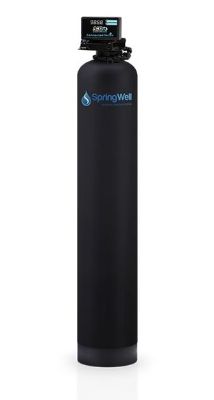
The short answer: Test your well first, then match the system to the result. If your test shows iron, manganese or a rotten-egg smell, our top pick is the SpringWell WS (~$2,231). SpringWell rates it for up to 7 ppm iron, 8 ppm hydrogen sulfide and 1 ppm manganese. For iron above 7 ppm, choose the SoftPro IronMaster (~$1,517). For severe sulfur, choose the US Water Matrixx (~$3,295). None of the iron, sulfur or pH systems here is certified for what it removes. So we rank them on the makers' published limits and show where those limits stop.
Test before you buy. Private wells are not regulated by the federal Safe Drinking Water Act or by most states, so the owner is in charge of testing (EPA). EPA advises a yearly test for total coliform bacteria, nitrates, total dissolved solids and pH. Your local health department may test for free or point you to a certified lab (EPA). Before you shop, add iron, manganese, hydrogen sulfide and hardness to the panel. SpringWell holds every well-system order until a water test comes back.
On city water instead of a well? See our guide to the best whole house water filters for chlorine, chloramine and PFAS.
Well Water Filtration Systems Compared
| System | Best for | Rated for (maker) | Flow | Certified? | Price | Check price |
|---|---|---|---|---|---|---|
| SpringWell WS (WS1 / WS4) | Best overall | Iron 7, H2S 8, manganese 1 ppm | 12 / 20 GPM | No | ~$2,231 / ~$2,678 | SpringWell |
| SoftPro IronMaster AIO | High iron | Iron 30, manganese 7 ppm | Needs 5–10 GPM from your pump | No | ~$1,517–$1,897 | SoftPro |
| US Water Matrixx inFusion | Severe sulfur | H2S 30, iron 20, manganese 1 ppm | 10 / 15 GPM | No | ~$3,295 / ~$3,395 | US Water |
| Aquasana Rhino Well + UV | All-in-one for clean, low-iron wells | Needs iron under 0.3, manganese under 0.05 ppm; hardness under 7 gpg | 7 GPM (UV certified at 6) | UV stage only: NSF/ANSI 55 Class B | ~$1,749 | Aquasana |
| SpringWell UV | UV stage after an iron filter | 30 mJ/cm² at 15 GPM (very clear water) | 15 GPM | No | ~$1,101 | SpringWell |
| Home Master 3-Stage | Budget sediment + light iron | Iron 3, manganese 1 ppm; pH 7.0+; no H2S | 15 GPM | No | ~$550 | The Perfect Water |
| SpringWell Calcite | Acidic water | Incoming pH 6.0–6.5 | 12 GPM | No | ~$1,814 | SpringWell |
| Moen 4-Stage RO (F9900) | Arsenic and lead at one tap | Arsenic (V), lead, fluoride | 27.5 gal/day | Yes: NSF/ANSI 58 (IAPMO) | ~$364 | SpringWell |
Prices were checked on each seller's site on October 4, 2026, and change often. SpringWell adds a required water test (~$134) to its well systems.
How We Chose These Systems
This list is research-based. We did not test these units ourselves. Our methodology had four steps:
- Published limits. We used each maker's own ppm limits, flow ratings and manuals. Where a maker publishes no number, we say so.
- Certification checks. We searched the live listings of NSF, IAPMO and WQA by brand and by parent company.
- Price and stock. We priced every system on the seller's site and confirmed it is still sold.
- Fit for wells. Each pick targets a problem that well tests often find; most appear in the USGS data below.
The certification search changed how we describe these systems. Only two picks hold a performance certification: the Moen RO and the UV stage of the Aquasana Rhino Well. None of the iron, sulfur or pH systems we considered has a listing (NSF listings). So treat their ratings as maker claims, and check the results with a follow-up test after you install.
We fact-checked every spec, price and certification in this guide against primary sources on October 4, 2026. Spot an error? Contact us, or read more about us.
What Turns Up in Private Well Tests
A national U.S. Geological Survey study sampled about 2,100 private wells in 48 states, before any home treatment. Of the 1,389 wells tested for every contaminant with a health benchmark (bacteria were counted separately), 23% had at least one above its benchmark, according to USGS.

Share of sampled private wells with each problem. Source: USGS Circular 1332 (2009), wells sampled 1991–2004; bacteria were tested in about 400 wells. Chart: World Water Reserve.
Nuisance problems were common too. Iron was above EPA's taste-and-staining limit in 19% of wells, and manganese in 21%, per the same USGS study. About 60% of wells had hard water. Coliform bacteria showed up in 34% of the wells tested for them, and arsenic topped EPA's limit in 6.8% (USGS). Your well can differ a lot from these averages, which is why the test comes first.
Match the System to Your Test Result
Parts per million (ppm) is the unit most well tests use for iron, manganese and hydrogen sulfide. It is the same as milligrams per liter (mg/L). Compare each number on your report with these limits:
- E. coli or total coliform: use bottled water or another safe source, then disinfect the well and retest. See If Your Test Finds Bacteria.
- Iron up to 7 ppm, manganese up to 1 ppm, hydrogen sulfide up to 8 ppm (SpringWell's ratings) and pH 6.5 or higher: SpringWell WS.
- Iron from 7 to 30 ppm, or manganese from 1 to 7 ppm: SoftPro IronMaster.
- Hydrogen sulfide above 8 ppm: US Water Matrixx (rated to 30 ppm). It also handles sulfur-bacteria slime, per US Water, but shock-chlorinate the well and pipes first.
- Iron under 0.3 ppm, manganese under 0.05 ppm, hardness under 7 grains per gallon and a clean bacteria test: Aquasana Rhino Well + UV.
- Sediment, with iron under 3 ppm, manganese under 1 ppm, pH 7.0 or higher and no sulfur smell: Home Master 3-Stage.
- pH from 6.0 to 6.5: SpringWell Calcite. Below pH 6, ask a dealer about a soda-ash feed.
- Arsenic or lead: a certified reverse osmosis system at the kitchen tap, such as the Moen 4-Stage RO.
- Nitrate above 10 mg/L as nitrogen (EPA's limit): it can make babies under six months seriously ill (EPA). Use another source for infant formula, and choose an RO system whose certification lists nitrate.
- Hardness above 120 mg/L (7 grains per gallon): USGS classes that as hard water (USGS). Add a softener from our well water softener picks.
Many wells need more than one stage. For example, a well with 4 ppm iron, a sulfur smell and pH 6.2 needs the calcite neutralizer first, because the SpringWell WS needs a pH of at least 6.5. A UV stage always goes last, after the water is clear.
The 8 Best Well Water Filtration Systems
1. SpringWell WS: Best Overall for Iron, Manganese and Sulfur
The SpringWell WS is a single-tank air injection system. Air injection oxidation is a process that adds air to the water so dissolved iron, manganese and hydrogen sulfide turn into particles. A bed of greensand fusion media traps the particles, and a scheduled backwash flushes them to a drain. No salt or chemicals are added.
SpringWell rates it to remove up to 7 ppm iron, 8 ppm hydrogen sulfide and 1 ppm manganese. It comes in two sizes. The WS1 is rated 12 GPM for 1 to 4 bathrooms. The WS4 is rated 20 GPM for 4 or more, though SpringWell's older manual lists it at 18 GPM.
Two limits matter. The WS needs water with a pH of 6.5 to 10 (6.8 for the WS4, per its manual), so acidic wells need a neutralizer first. And SpringWell says not to use it on water that is microbiologically unsafe. If your well also has hard water, SpringWell bundles the WS with a salt-based softener or a salt-free conditioner.
- Price: ~$2,231 (WS1) or ~$2,678 (WS4), plus a required water test (~$134)
- Media life: 10+ years, per SpringWell
- Warranty: lifetime on most parts; SpringWell lists exceptions, such as 5 years on the electronic head
- Returns: unused, uninstalled units within 6 months (10 percent restocking fee)
- Certification: none at NSF, IAPMO or WQA
Pros: treats iron, manganese and hydrogen sulfide in one tank; no salt, chemicals or cartridges; long media life.
Cons: the most expensive air injection pick; needs a drain line, a power outlet and usually a plumber; iron tops out at 7 ppm.
Best for: wells with moderate iron, manganese and a rotten-egg smell, and a pH of 6.5 or higher.
2. SoftPro IronMaster AIO: Best for High Iron

The SoftPro IronMaster AIO is also an air injection filter. It pairs the air pocket with Katalox Light media in a backwashing tank. SoftPro rates it to remove up to 30 ppm iron and up to 7 ppm manganese. That is the highest iron rating in our lineup. SoftPro says it also removes sulfur odor, but it publishes no hydrogen sulfide limit.
Size it to your well pump. SoftPro lists a minimum flow rate for each tank: 5 GPM for 1.0 cubic foot, 7 GPM for 1.5 and 10 GPM for 2.0. Check that your pump can deliver it.
- Price: ~$1,517 / ~$1,757 / ~$1,897 (1.0 / 1.5 / 2.0 cubic feet)
- Media life: about 5 to 10 years, per SoftPro's manual
- Warranty: limited lifetime on the tank and core parts; 60-day money-back guarantee on the product page
- Certification: none for this system. SoftPro's page shows an "NSF / WQA / ANSI Certified" badge, but no listing names the IronMaster
Pros: the highest iron and manganese ratings here; chemical-free; three sizes; lower price than the SpringWell WS.
Cons: no published sulfur limit or service flow; needs power and a drain; SoftPro says not to use it on microbiologically unsafe water.
Best for: iron above 7 ppm or manganese above 1 ppm.
3. US Water Matrixx inFusion: Best for Severe Sulfur

The Matrixx inFusion uses a different method. Chemical injection is a process where a small pump feeds an oxidizer into the water before it reaches a filter tank. Here the oxidizer is hydrogen peroxide, and a catalytic carbon tank removes what it oxidizes.
US Water rates it for up to 30 ppm hydrogen sulfide, 20 ppm iron and 1 ppm manganese, at a pH of 6 to 9. No other system in this guide publishes a sulfur rating above 8 ppm. US Water says it also works on iron and sulfur bacteria. Its manual adds a warning, though: the system does not remove biological contaminants, and bacteria already in your pipes may need a chlorine shock.
- Price: ~$3,295 (10 GPM, 1 to 2 bathrooms) or ~$3,395 (15 GPM, 2 to 3.5 bathrooms)
- Upkeep: refill the peroxide tank; replace the carbon every 3 to 5 years
- Warranty: 10 years on parts, lifetime on the media tank, 5 years on the injection pump (register within 30 days); 1-year money-back promise
- Certification: none for the system; US Water says all components are NSF-approved
Pros: the highest sulfur rating here; handles high iron and sulfur at once; works on sulfur bacteria in the water, per US Water.
Cons: the highest price in this guide; peroxide refills; a wall-mounted pump plus a tank, so plan on a plumber.
Best for: a strong rotten-egg smell above 8 ppm, or sulfur-bacteria slime (US Water's claim; shock-chlorinate the well and pipes first).
4. Aquasana Rhino Well + UV: Best All-in-One for Clean, Low-Iron Wells

The Aquasana Rhino Well Water with UV is the all-in-one pick in this guide. It combines a sediment pre-filter, a carbon and KDF tank, a post-filter and a UV lamp. Its UV unit is certified to NSF/ANSI 55 Class B (NSF listing). NSF/ANSI 55 Class B is the UV rating for water that is already safe to drink. It reduces nuisance bacteria; it is not meant to make unsafe water safe (NSF).
It suits only clean, low-iron wells. Aquasana requires iron under 0.3 ppm and manganese under 0.05 ppm for the UV to work, and its tank warranty excludes damage from iron or sediment build-up. Its UV also needs hardness under 7 grains per gallon, so hard wells need a softener ahead of it. If your iron or manganese is higher, put an iron filter such as the SpringWell WS ahead of it, or pair the WS with the SpringWell UV. Aquasana rates the system at 7 GPM, for up to 2.5 bathrooms and 4 people, and its UV stage is certified at 6 GPM.
- Price: ~$1,749 (sale price; list ~$3,498)
- Upkeep: sediment pre-filter about every 2 months; post-filter every 6 months; UV lamp yearly
- Capacity: carbon tank 5 years or 500,000 gallons
- Warranty: tank 5 years; UV chamber 10 years, electronics 3 years, lamp 1 year
- Certification: UV stage NSF/ANSI 55 Class B; the filter tank has no listing
Pros: sediment, carbon and a certified UV stage in one package; one install instead of three.
Cons: no iron, manganese or sulfur capacity; frequent pre-filter changes; 7 GPM is low for bigger homes; it does not soften water.
Best for: smaller homes on wells that test bacteria-safe, low in iron and under 7 grains per gallon of hardness (or that already have a softener), as an extra safeguard.
5. SpringWell UV: Best UV Stage After an Iron Filter

The SpringWell UV is a standalone UV unit that goes after an iron filter such as the WS. UV dose is the amount of UV energy the water receives, measured in mJ/cm². SpringWell rates this unit at 30 mJ/cm² at 15 GPM in very clear water (95 percent UV transmittance). EPA's rule credits 22 mJ/cm² with inactivating 99.99% of Giardia and Cryptosporidium (40 CFR 141.720). Some viruses need far more: 143 mJ/cm² for 99.9%, under the same EPA rule.
The unit has no NSF/ANSI 55 listing. SpringWell's warranty also requires hardness under 7 grains per gallon, iron under 0.3 ppm and manganese under 0.05 ppm. Use it only on water that tests safe, as an extra barrier. For a well with confirmed bacteria, see the next section.
- Price: ~$1,101
- Flow: 15 GPM at 30 mJ/cm²; about 11 GPM at 40 mJ/cm²
- Upkeep: replace the lamp every year; put a 5-micron sediment filter ahead of it
- Warranty: reactor 10 years, electronics 3 years, lamp and sleeve 1 year
- Certification: none
Pros: high flow for a whole house; no chemicals; lamp-life countdown and alarm.
Cons: not certified; needs clear water; no protection during a power outage, after which SpringWell says to disinfect the plumbing.
Best for: adding UV after a SpringWell WS (plus a softener if hardness is over 7 grains per gallon) on a well that tests safe.
6. Home Master 3-Stage: Best Budget Pick for Sediment and Light Iron

The Home Master HMF3SdgFeC is three large cartridges in a row. Stage one is a sediment filter that grades from 25 down to 1 micron. Stage two is an iron filter, and stage three is coconut-shell carbon. The seller rates it at up to 15 GPM.
It is built for light problems only. Home Master lists limits of iron under 3 ppm, manganese under 1 ppm and pH above 7.0. It is not for hydrogen sulfide or iron bacteria.
- Price: ~$550
- Filter life: carbon about 100,000 gallons (about a year); sediment 6 to 12 months
- Warranty: 2 years; 30-day money-back guarantee
- Certification: none for the system
Pros: the lowest price of the whole-house picks; no power or drain needed; filter changes need only the included wrench.
Cons: ongoing cartridge costs; no sulfur capacity; iron limit of 3 ppm.
Best for: sediment and light iron on a tight budget, with a pH of 7.0 or higher.
7. SpringWell Calcite: Best for Acidic Water

Acidic water can pull copper and lead from plumbing and leave blue-green stains (UMass Extension). The SpringWell Calcite neutralizer raises pH by running water through calcite, a form of calcium carbonate that slowly dissolves. SpringWell rates it for incoming water with a pH of 6.0 to 6.5, at 12 GPM.
It is not a passive tank. The electronic head needs an outlet, and it backwashes to a drain every 7 days for about 45 minutes. You add calcite as the bed shrinks. The dissolved calcite also makes water harder, so test hardness afterward. For water below pH 6, the Water Systems Council lists two options: a calcite and magnesium oxide blend, or a soda-ash feed pump (Water Systems Council).
- Price: ~$1,814, plus the required water test (~$134)
- Warranty: lifetime on most parts; 5 years on the electronic head
- Certification: none
Pros: protects pipes and fixtures; automatic backwash; no chemicals to handle.
Cons: needs power and a drain; calcite top-ups; raises hardness; not for water below pH 6.
Best for: wells with a pH of 6.0 to 6.5 and blue-green stains.
8. Moen 4-Stage RO: Best for Arsenic and Lead in Drinking Water

Arsenic and lead need different treatment from iron. EPA's approved methods for arsenic include reverse osmosis, ion exchange and activated alumina, not carbon or KDF (40 CFR 141.62). Whole-house arsenic systems cost far more, so treating only drinking and cooking water at one tap is the budget route.
The Moen 4-Stage RO (F9900) is an under-sink unit sold by SpringWell. IAPMO certifies it to NSF/ANSI 58 for arsenic (V) (tested at up to 300 ppb), lead, fluoride, barium, cadmium, chromium, copper and selenium (IAPMO listing). There are two caveats. The arsenic claim covers arsenic (V) only, so arsenic (III) has to be converted to arsenic (V) first, for example by chlorination. And its certified output is 27.5 gallons per day, lower than the 75 gallons per day in SpringWell's product description.
- Price: ~$364
- Certification: NSF/ANSI 58 (IAPMO), including arsenic (V) and lead
- Setup: under one sink, with a storage tank
Pros: certified for arsenic and lead; low price; small footprint.
Cons: treats one tap only; hardness and sediment can foul the membrane, so treat those first.
Best for: drinking water on wells with arsenic or lead. Ask your lab whether your arsenic is arsenic (III) or (V), and test the treated tap water after you install.
If Your Test Finds Bacteria
If your test finds E. coli or total coliform, stop drinking the untreated water. Use bottled water or another safe source, and contact your local health department (CDC). A positive E. coli test likely means feces, and the germs in it, have reached your well, according to the CDC.
A positive result does not always mean you need a permanent disinfection system. Some positive results come from a one-time event, such as a new pump or runoff from unusually heavy rain. Penn State Extension recommends shock chlorination first: you disinfect the well with a strong chlorine dose, then retest (Penn State Extension). Strong chlorine can damage some treatment equipment, so check your manuals about bypassing it first.
Shock chlorination does not always last. In a Penn State study, shock chlorination plus a sanitary well cap kept coliform out for a year in only 15% of contaminated wells (Penn State Extension). If bacteria come back, find and fix the source, and ask your health department for help.
For ongoing disinfection, use a proven method such as continuous chlorination or a UV system certified to NSF/ANSI 55 Class A (EPA lists chlorine, ozone and UV). Class A is the rating for treating contaminated water (NSF). NSF's standard sets the Class A dose at 40 mJ/cm² and requires a UV sensor tied to an alarm that warns when output drops (WC&P). None of our picks is Class A. See the Class A options in our UV water purifier guide.
How Whole-House Well Systems Work
A point-of-entry (POE) system is one installed where the water line enters the house, so it treats every tap. A point-of-use (POU) system treats one faucet, like the Moen RO. Most well problems, such as stains, odor and sediment, affect every tap, so they need a POE system.
- Oxidizing filters (SpringWell WS, SoftPro IronMaster) turn dissolved iron, manganese and sulfur into particles, then backwash them away. See how to remove iron from well water.
- Chemical injection adds peroxide (Matrixx) or chlorine for heavier sulfur and iron bacteria. See how to treat iron bacteria.
- Sediment cartridges (Home Master) trap sand and silt. They need regular replacement.
- UV units inactivate microbes but remove nothing else, so they go last.
- Neutralizers (calcite) raise low pH.
- Softeners swap hardness minerals for sodium or potassium. They are not filters, but they can also remove small amounts of dissolved iron (Penn State Extension).
- Reverse osmosis pushes water through a membrane. It is usually installed at one sink.
Hydrogen sulfide treatment depends on how much you have. Penn State Extension notes that activated carbon handles under about 1 mg/L, while levels above 6 mg/L generally call for a continuous chemical feed, such as chlorine or potassium permanganate. It calls hydrogen peroxide, which the Matrixx injects, an excellent oxidant for hydrogen sulfide, though one used less often in home systems (Penn State Extension). US Water rates the Matrixx to 30 ppm. Penn State puts oxidizing filters, the type the SpringWell WS uses, at up to about 2 to 3 mg/L. Above that, the WS's 8 ppm rating rests on SpringWell's own claim, so retest after you install.
Secondary maximum contaminant levels (SMCLs) are EPA's non-enforceable guidelines for taste, odor and staining. The SMCL is 0.3 mg/L for iron and 0.05 mg/L for manganese, and EPA recommends a pH of 6.5 to 8.5 (USGS). Outside those levels, expect stains, off tastes or corrosion.
How Much Does a Whole-House Well Water System Cost?
Based on October 2026 prices, a cartridge system like the Home Master costs about $550. Air injection tank systems run about $1,517 to $2,678. A peroxide injection system like the Matrixx costs about $3,300. SpringWell's bundles that pair the WS with a softener start around $3,124.
Add installation and upkeep. Tank systems need a drain line and a power outlet, and installation often calls for a plumber. Running costs include cartridges, peroxide refills, yearly UV lamps and calcite top-ups. For example, the Home Master's iron and carbon cartridges cost about $100 each.
Downsides of Whole-House Well Systems
- No certification for iron or sulfur. You rely on maker ratings, so retest after you install.
- Backwash water and power. Tank systems flush to a drain and need an outlet.
- They don't make unsafe water safe. SpringWell and SoftPro say not to use their iron filters on microbiologically unsafe water. US Water says the Matrixx does not remove biological contaminants.
- One system rarely fixes everything. Many wells need two or three stages.
Frequently Asked Questions
What type of water filter should I use for well water?
Use the type that matches your test. Iron, manganese and moderate sulfur call for an air injection filter like the SpringWell WS. Severe sulfur calls for chemical injection like the Matrixx. Sediment alone calls for cartridges, and acidic water calls for a calcite neutralizer. Bacteria call for bottled water until the well is disinfected and retests clean, and arsenic calls for certified reverse osmosis.
Do I need a whole-house filter for well water?
You need one if the problem shows up at every tap, such as stains, odor or sediment. For bacteria, switch to bottled water, then disinfect the well and retest before you buy anything. If your only concern is in drinking water, such as arsenic or nitrate, a certified RO system at the kitchen sink may be enough. Check that its certification lists your contaminant by name.
Do I need a water softener if I have a well?
Only if your water is hard. About 60% of private wells in the USGS study had hard water, above 120 mg/L (USGS). A softener prevents scale but does not remove most contaminants. See our best water softeners for well water, or our salt-free options.
Is reverse osmosis good for well water?
Yes, at the kitchen tap. RO is one of EPA's approved methods for arsenic and nitrate (40 CFR 141.62). Treat hardness and sediment first, or they can foul the membrane. See our best reverse osmosis systems.
How often should I test my well water?
EPA advises testing every year for total coliform bacteria, nitrates, total dissolved solids and pH (EPA). CDC also advises testing after you repair or replace any part of the well system, or if the taste, color or smell changes (CDC). Retest after shock chlorination, and after you install a new system to confirm it works. Our guide on how to test water quality covers the options.
Do these systems remove PFAS?
None of our picks, including the Moen RO, is certified for PFAS. A 2023 USGS study estimated that at least 45% of U.S. tap water has PFAS, with similar levels in private wells and public supplies (USGS). EPA lists activated carbon, ion exchange and reverse osmosis as effective treatments (EPA). See how to avoid forever chemicals.
Key Takeaways
- Test first. Private wells are your responsibility, and EPA advises a yearly test.
- Iron, manganese and moderate sulfur: SpringWell WS (iron 7, H2S 8, manganese 1 ppm).
- High iron: SoftPro IronMaster (iron 30, manganese 7 ppm).
- Severe sulfur: US Water Matrixx (H2S 30 ppm).
- Clean, low-iron wells that want a UV safeguard: Aquasana Rhino Well + UV.
- Budget sediment: Home Master 3-Stage. Acidic water: SpringWell Calcite.
- Arsenic or lead: a certified RO at the kitchen tap, such as the Moen 4-Stage RO.
- Bacteria: stop drinking the untreated water, shock-chlorinate and retest; for ongoing disinfection, use continuous chlorination or an NSF/ANSI 55 Class A UV.
- Certification: no iron, sulfur or pH system here is certified, so confirm results with a follow-up test.
Related reading: how to remove iron from well water, best water softeners for well water and off-grid water systems.
Share this post!