Learn 8 proven methods to purify water for drinking — from filtration and boiling to solar purification and reverse osmosis. Includes pros and cons.
There are eight methods for purifying water for drinking, each removing a different range of contaminants and suited to different situations. Below is a quick summary; the sections that follow cover each method in detail.
- Boiling — kills bacteria, viruses, and parasites; best for emergencies and off-grid use
- Chlorine disinfection — kills bacteria, most viruses, and Giardia; best for travel and emergency kits
- Water filtration — removes sediment, bacteria, parasites, and some heavy metals; best for everyday portable and home use
- UV purification — destroys bacteria, viruses, and parasites; best for home disinfection without chemicals
- Reverse osmosis — removes bacteria, viruses, heavy metals, PFAS, nitrates, and dissolved minerals; best for comprehensive home purification
- Iodine disinfection — kills bacteria, most viruses, and Giardia; best for lightweight travel kits; not effective against Cryptosporidium
- Solar purification (SODIS) — kills bacteria and viruses using UV from sunlight; best for off-grid or low-resource situations
- Distillation — removes bacteria, viruses, heavy metals, and dissolved solids; the most complete method for home use but slow
No single method covers every scenario. For home use, reverse osmosis offers the broadest contaminant removal. For travel and emergencies, chlorine dioxide tablets or a portable filter are simpler to deploy. Boiling works when nothing else is available. The sections below explain how each method works and when to use it.
Which Method Is Right for You?
The right method depends on your water source and situation.
City water at home: Municipal water is treated, but treatment doesn't catch everything — PFAS, lead leaching from aging pipes, and disinfection byproducts can still reach your tap. An under-sink reverse osmosis system handles all three. If your water quality report shows no major contamination and your concern is mainly taste and chlorine, a solid block carbon filter is sufficient at lower cost.
Well water at home: Well water receives no municipal treatment, so contamination varies with local geology and nearby land use. Test your water first — many county health departments offer low-cost testing. If bacteria are present, combine filtration with UV disinfection. For PFAS or nitrates, reverse osmosis is the only reliable residential option.
Travel and backpacking: Chlorine dioxide tablets (such as Katadyn Micropur) are the lightest option that handles bacteria, viruses, and Giardia. A pump or squeeze filter adds physical filtration for turbid water. For international travel where viruses are a concern, confirm your filter's claimed log reduction for viruses — most backcountry filters stop at bacteria and parasites.
Emergency and off-grid: Boiling requires no consumables and handles any pathogen load — bring water to a rolling boil for one minute (EPA recommends three minutes above 6,500 feet). Keep chlorine tablets as backup when fuel isn't available. Solar purification works at low effort but requires clear plastic bottles and bright sunlight — allow a minimum of six hours exposure for clear water.
8 Purification Methods Compared
| Method | Removes | Best For | Effort |
|---|---|---|---|
| Boiling | Bacteria, viruses, parasites | Emergencies, off-grid use | Low (heat + time) |
| Chlorine disinfection | Bacteria, viruses, Giardia | Emergency kits, short-term travel | Low (tablets or bleach) |
| Water filtration | Sediment, bacteria, parasites, some heavy metals | Everyday portable use, pre-treatment | Low–Medium |
| UV purification | Bacteria, viruses, parasites | Home disinfection (chemical-free) | Medium (requires electricity) |
| Reverse osmosis | Bacteria, viruses, heavy metals, PFAS, nitrates, dissolved minerals | Comprehensive home purification | Medium (filter changes every 6–12 months) |
| Iodine disinfection | Bacteria, viruses, Giardia | Lightweight emergency/travel kit | Low (tablets) |
| Solar purification (SODIS) | Bacteria, viruses | Off-grid, low-resource situations | Low (6+ hours sunlight) |
| Distillation | Bacteria, viruses, parasites, heavy metals, dissolved solids | Complete contaminant removal at home | High (slow, requires equipment) |
Chlorine Disinfection
- Removes: Bacteria, Viruses, Giardia
- Advantages: Tablets are lightweight and compact, Kills viruses, More effective when used with filtration, Inexpensive
-
Disadvantages: Waiting time, Not effective against Cryptosporidium or Cyclosporum
While chlorine is often associated with swimming pools, it can make water potable by eliminating bacteria and viruses in moderate amounts. Chlorine is widely used in purifying water at municipal levels, making water safe for drinking for a city's population.
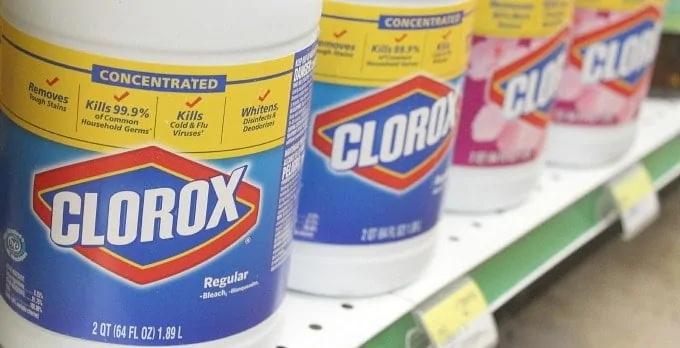
Bleach, the common term used for household grade Chlorine, is typically sold at 4% to 6% chlorine concentration and is used to disinfect water for safe drinking.
The active ingredient in any Chlorine product is Sodium Hypochlorite; its use depends on its concentration.
How Much Bleach Should I Use?
When using household bleach, use two drops for every liter of water or eight drops for every gallon of water, and let it stand for 30 minutes before drinking. This time allows the chlorine to take effect (Scientific American, 1998). Be sure always to use unscented bleach.
This is a particularly convenient purification method when out camping, run out of bottled water, and are forced to gather water from a natural source.
Chlorine is effective against bacteria and most viruses. Norovirus, an intestinal disease that causes diarrhea, is particularly resistant to chlorine and will require the water to sit twice as long instead of the standard 30 minutes before consumption. Giardia, a parasite with a protective coating, will survive in chlorine-treated water for 45 minutes before it is safe to drink.
Water Purification Tablets
Chlorine can also come in the form of pre-dosed tablets, which would be dropped into a container of water and allowed to sit for 30 to 45 minutes while the chemical destroys the pathogens. Water purification tablets are very convenient for those traveling overseas or hiking in the wilderness.
The convenience of not having to measure the amount of liquid chlorine and being able to carry the lightweight tablets in a backpack has allowed these tablets to gain much popularity among campers, backpackers, humanitarians, and those traveling to areas where clean water is questionable.
Read our article on water purification tablets for a detailed guide on how they work and which brands to use.
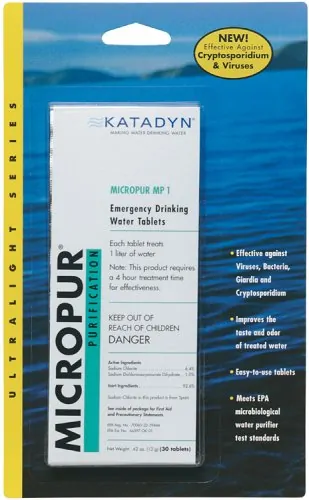
Recommended Purification Tablets: Micropur MP1
Micropur MP1 purification tablets by Katadyn are a chlorine-dioxide-based, emergency water purification solution that can easily eliminate bacteria, viruses, and parasites from contaminated water. With a 5-year shelf-life and consistent track record, Katadyn is definitely one of our favorite brands.
- Chlorine Dioxide-based
- 15-minute wait time for bacteria and viruses
- 30-minute wait time for Giardia
- 4-hour wait time for Cryptosporidium
- 5-year shelf life
- 20 tablets per package
- 1 tablet treats 1 liter of water
Carbon Filtration

- Removes: Sediment, Bacteria, Large parasites, Some heavy metals
- Advantages: Quick, Taste of water not altered significantly
-
Disadvantages: Requires filter replacement, Not effective against viruses
Water filtration is probably the most common purification method for personal consumption, mainly because of its versatility and ease of use. Water filtration systems come in many forms and sizes; some are even portable. The most common water filtration systems are integrated with household sinks and refrigerators by connecting them to the waterline.
How Do Filters Work?
The pore size of the filter, usually measured in microns, will determine what will be filtered through. While a standard micron size of 0.2 is small enough to block heavy metals such as lead and copper and large parasites such as Cryptosporidium, it will not block viruses. The National Sanitation Foundation sets a standard for effective water filtration products, so look for an NSF stamp when selecting a filter to purchase.
Filtration systems use activated carbon and charcoal arranged in a cylindrical or round block. These highly porous materials efficiently adsorb contaminants from the water. As water flows through the carbon, chemicals, and contaminants stick to the carbon, allowing pure water to flow to the filtration system’s basin.
Active carbon is highly effective in removing 81 chemicals from water. Studies show that it can also remove at least 14 types of pesticides and 12 types of herbicides from water. In addition, carbon also removes bad odors coming from chlorine-treated water (Tapp Water, 2018).
The inner filter will need to be replaced periodically. Depending on the size and usage, most home filtration systems recommend replacing the filter every six months. Smaller, portable water filters need to be replaced more frequently.
Filtration continues to be one of the most popular water purification systems because of its portability, affordability, durability, and ease of use.
Portable Water Filters
Water filters can come in smaller, portable forms, which are convenient for travel and outdoor activities. Those who go hiking and backpacking often come across bodies of fresh water such as lakes and rivers. While lakes and rivers are considered fresh compared to seawater, they still need to be filtered before drinking due to sediment and potential bacteria. A portable water filter will eliminate the worry of ingesting harmful contaminants such as bacteria, parasites, and sedimentary rock.
Read our article on portable water filters for a detailed guide on how they work and which brands to use.
For a full comparison of home water filtration options — from whole-house systems to under-sink and countertop filters — see our guide to the best water filtration systems for home.
One low-tech option worth exploring is the biosand filter, a gravity-fed system used in communities around the world to remove pathogens and suspended solids without electricity.
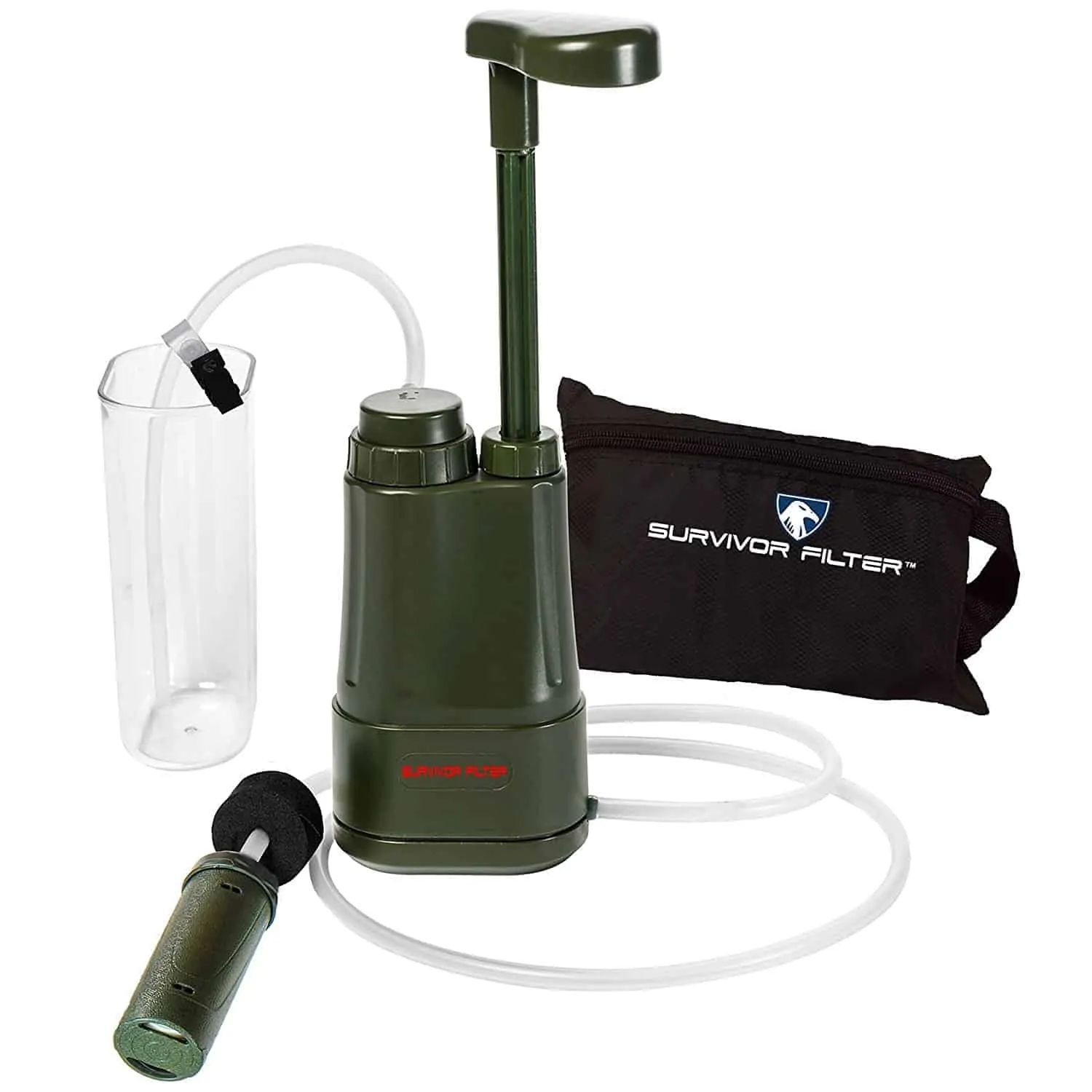
Recommended Portable Water Filter: Survivor Filter PRO
With a pore size of 0.01 microns, the Survivor Filter PRO is a portable water filter capable of removing bacteria, viruses, and parasites. With a 500mL per minute flowrate, this filter is an excellent choice for backpacking and survival situations.
- Removes Bacteria, Parasites, Viruses, Heavy Metals
- 0.01 Microns
- Filter Capacity: 26,000 Gallons
- 3-stage Filtration System
- Lifetime Warranty
UV Purification

- Removes: Bacteria, Viruses, Parasites
- Advantages: Cleans water rapidly and effectively
-
Disadvantages: Expensive, Requires electricity, Does not remove heavy metals, High maintenance
The ultraviolet rays of the sun can be highly destructive to microorganisms. Humans avoid it as much as possible as it can cause skin cancer and other diseases. But we have learned to harness its power and use it to our advantage, especially in decontaminating our water from harmful bacteria and pathogens. UV light has been a standard in the disinfection of water supplies at the municipal level for decades but has recently become available for home use.
UV water purification is one of the most effective ways of eliminating pathogens from a water source due to the broader range of contaminants that are defenseless against ultraviolet radiation. Bacteria, waterborne viruses, molds, and parasites are all inactivated by ultraviolet light.
UV water purification systems produce more UV light than the sun and are, therefore, more potent than solar purification. In fact, a UV purification system is more effective at killing viruses such as Norovirus and Hepatitis than chlorine disinfection and will kill them instantly instead of 60 minutes.
For a more complete off-grid solution, a solar-powered water purifier can treat water reliably using UV light with no electricity or chemicals required.
 (opens in a new tab)
The UV light's intensity, or frequency, will determine its efficiency in killing organisms. The higher the intensity, the more effective it is at eliminating pathogens.
The UV light is mounted in a chamber, water flows through it, and any harmful bacteria or virus will die instantly when exposed to the UV radiation channel. UV water purification systems are rated to achieve 99.99% inactivation of microorganisms when sized to NSF/ANSI Standard 55 Class A specifications.
The ultraviolet light does not affect the water itself in any way; no strange tastes or odors will be detected.
Despite its efficiency in killing microorganisms, UV radiation will not remove heavy metals and particles. Something else to consider is the high maintenance requirement for a UV purification system. Maintaining a properly functioning system requires frequent cleaning and proper part replacement.
Read our article on UV water purification systems for home to learn more.
Recommended Home UV Purifier
The ArrowMAX 2.0 by Acuva Technologies is an excellent choice for home UV purification. With a flow rate of 2L per minute, this UV system will ensure microorganism-free water for your home.
- Flow rate: 2 liters per minute
- Max PSI: 100
- Dose Delivery: >16 mJ/cm²
- Certification: NSF/ANSI-55

Reverse Osmosis

- Removes: Bacteria, Viruses, Parasites, Impurities and Heavy metals
- Advantages: Removes microorganisms effectively, Improves taste
-
Disadvantages: Expensive, High maintenance
Reverse osmosis is a process that forces water through a semi-permeable membrane to remove contaminants.
Osmosis is a naturally occurring process where a less concentrated solution, such as freshwater, tends to move toward a more concentrated solution, such as seawater. In this case, the difference in the two concentration levels would be the saltwater molecules in the seawater.
How Does Reverse Osmosis Work?
The process can be reversed with external pressure, allowing the more concentrated solution to move toward the less concentrated solution.
With a semi-permeable membrane in place and a screen that only allows smaller molecules to pass, the saltwater molecules are left behind while the freshwater passes through. Thus, the result is pure, clean water, free of contaminants (Pure Tec).
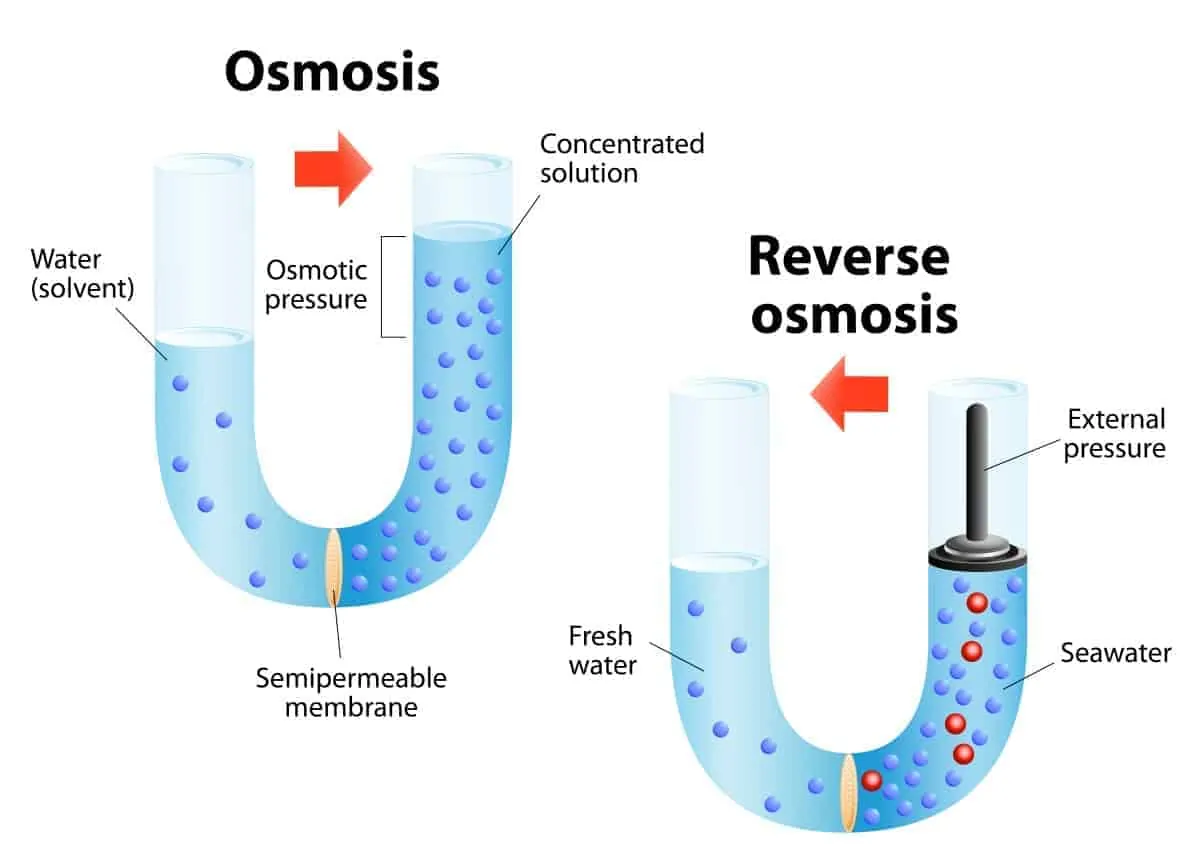
Because the semi-permeable membrane filters particles at the molecular level, reverse osmosis is exceptionally effective at removing bacteria, viruses, parasite cysts such as Giardia and Cryptosporidium, heavy metals such as lead and mercury, hard water minerals such as calcium and magnesium, and even fluoride and arsenic. It will not, however, remove certain pesticides and solvents small enough to pass through the membrane.
RO systems have been one of the standard water purification systems for the bottled water industry and in military practices. Smaller home RO systems are available for installation into the waterline, allowing clean, purified water to be accessed through the faucet and shower.
RO systems can be quite expensive and require frequent maintenance, but they are one of the most effective purification systems that can be accessed today.
Reverse Osmosis for Home Use
While reverse osmosis systems are widely used for industrial and commercial purposes, smaller home units can be purchased and installed under the kitchen sink and dispensed through the faucet. Home RO units typically run on a 3-stage system which includes a carbon filter, RO membrane, and re-mineralizing filter for taste.
Some systems can include 5, 7, or even ten stages. While the additional stages offer extra benefits such as pH level balance and UV filtration, a simple 3-stage system has everything required to produce pure, drinkable water. RO systems require frequent maintenance and replacement of filters to keep them functioning correctly.
Read our article on reverse osmosis systems for home use for a detailed guide on how they work and which brands to use.
Recommended Home Reverse Osmosis System
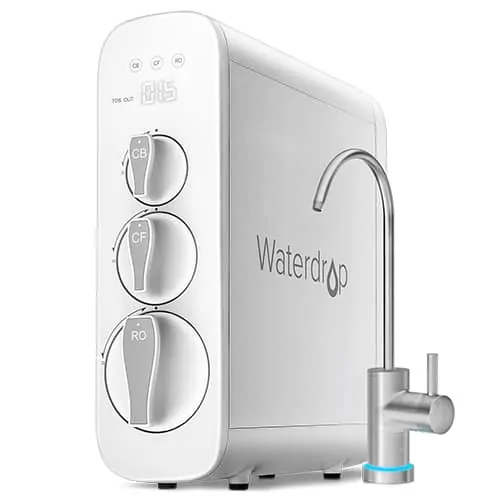
While most residential reverse osmosis systems tend to be on the slow end in terms of flow rate, the technology in the Waterdrop allows it to provide 400 gallons per day. It's highly efficient at a 1:1 drain ratio and comes with a Smart TDS monitoring panel. The Waterdrop is clearly at the head of its class.
- Smart TDS monitoring panel
- 400 GPD Fast Flow
- 1:1 Low Drain Ratio
- 7-stage Filtration
- Automatic Flushing
Iodine Treatment
- Removes: Bacteria, Viruses, Giardia.
- Advantages: Lightweight, Compact, More effective with filtration, Inexpensive
-
Disadvantages: Slow, Unpleasant taste, Not effective against Cryptosporidium
Iodine is more popularly known as a powerful disinfectant and salt component that helps prevent thyroid problems, but it is also used in water purification processes. Iodine, a reddish-orange chemical, kills bacteria and viruses at the cellular level and is available in many forms: tablet, crystal, liquid, or tincture.
It can kill Giardia cysts when allowed to sit for at least 50 minutes instead of the standard 30 minutes but is ineffective against Cryptosporidium.
Iodine is very powerful. It can be lethal in high doses and should therefore be used to purify water only when other methods are unavailable, but not as a standard water purification method. Pregnant women, children, and those with thyroid problems, iodine, or shellfish allergies should avoid using it.
How to Use Iodine to Purify Water
To purify water with tincture iodine, combine two drops for every quart of clear water. If the water is cloudy, use ten drops for every quart. Let the solution stand for at least 30 minutes, and let the iodine do its job. Be informed that this will change the water’s flavor.
If you use crystal or tablet iodine, follow the manufacturer’s instructions. Typically, a bottle of crystal iodine can treat up to 2000 quarts of water (Instructables, 2008).
Iodine is light-sensitive and should always be stored in a dark bottle. Like Chlorine, Iodine can come in the form of tablets, allowing for convenience and ease of carrying.
Read our article on iodine water purification tablets to find out more.
Solar Purification

- Removes: Bacteria, Viruses
- Advantages: Inexpensive, Easy to set up
Disadvantages: Depends heavily on weather, Very slow even on sunny days
Solar purification is effective when traditional purification methods are unavailable, such as when backpacking, living off-grid, or in emergencies. The ultraviolet rays of the sun are effective in killing bacteria and viruses.
A popular misconception about the safety of stagnant pond water is that the sun's heat kills any potentially dangerous microbes. The reality is that stagnant ponds should always be considered unsafe because the water below the surface is an ideal breeding ground for bacteria and mosquitoes.
How to Use the Sun to Purify Water
One way to disinfect water through solar purification is through a plastic bottle and sunlight. Remove all labels and paper from the bottle and ensure it has no scratches. Fill it with water to about three-quarters full, shake for a half-minute to activate the oxygen, fill it with water to the brim, cover it, lay it horizontally, and expose it to direct sunlight (Water Benefits Health).
For best results, choose a location where direct sunlight will be undisturbed for at least six hours. If it is a little cloudy, exposure time increases to two days.
How to Use a Solar Still
A Solar Still is a device that can be constructed to distill contaminated water into drinking water or pull condensation from damp resources to produce enough water for consumption. Solar stills can be life-saving if stranded in the desert without water or lost at sea. This simple device uses the sun to evaporate contaminated water from a collection basin and collect the condensation in another basin.
The condensation is essentially distilled and drinkable. It can be done with saltwater and can even be constructed to pull moisture from the ground if water isn't available at all. Solar stills can either be constructed out of simple materials or purchased and used for emergencies.
To learn how to make a solar still in a survival situation or to purchase one in case of emergency, read our detailed article about solar stills here.
Boiling

- Removes: Bacteria, Viruses, Parasites
- Advantages: Free of all pathogens if done correctly
Disadvantages: Slow and inconvenient, Flat water taste
This is perhaps the most ancient method of purifying water and is still widely used in remote places and highly urbanized areas. Boiling water produces enough heat to kill every type of pathogen, making water safer to drink.
Using the laws of pasteurization, a process used to make milk safe to drink, we know that most pathogens will not survive in temperatures above 70 degrees Celsius if the water is boiled for a long enough period. (EPA, 2017).
How to Purify Water with Boiling
If the water is cloudy, filter the large contaminants through a clean cloth or coffee filter.
Heat the water and bring it to a boil. Thermometers might not always be readily available, so bubbles indicate that the water has reached 100 degrees. Let it boil for 1 minute straight.
At elevations above 5,000 feet, boil the water for three straight minutes.
After boiling, let it cool, put the water in a clean container, and cover it to avoid recontamination of bacteria and microbes.
Boiled water will always have a flat taste. Swishing the water before drinking or transferring it from one container to another can improve the taste.
Distillation

- Removes: Bacteria, Viruses, Parasites, Impurities and Heavy Metals
- Advantages: Free of all pathogens and heavy metals
-
Disadvantages: Slow and inconvenient, Free of minerals as well
Distillation is the process of collecting condensation from evaporated steam and is the most effective way of ensuring that the water will be free of all contaminants.
The Ancient Greeks have used the process of distilling seawater into drinking water since about 200 AD (Wikipedia). Many other cultures throughout history have used distillation to ensure potable water effectively. Although the materials used in the distillation process have changed over time, the science has remained the same, proving that distillation is a purification method that has stood the test of time.

How to Distill Water
The materials needed to distill water are a boiling pot, a container to collect the condensation, a tube to allow the vapor to travel through, and a heat source. Once the water begins to boil, the evaporation travels through the tube and collects in the new container.
Because contaminants cannot exist in steam form, the "new" water is free of bacteria, viruses, parasites, particles, solvents, and chemicals.
Because distillation is such an efficient process, it rids the water of essential minerals as well as contaminants. These natural minerals can be supplemented simply by adding them or by ensuring a mineral-rich diet.
Home Distillation Units
Home distillation units which sit on the countertop are available for purchase. Typically made of 304-grade stainless steel, most distillation units can distill water at a rate of 4 gallons per day.
Read our article on home distillation units for a detailed understanding of how they work and which brands to use.
Other Methods of Water Purification
While the methods we've mentioned are certainly the most common and have proven effectiveness, research is being put into other methods that are quickly gaining traction in both private and government sectors.
- Electrodialysis Reversal (EDR) - In EDR, an electric current moves dissolved particles through a series of ionic membranes. This movement of particles gradually frees the water of contaminants.
- Nanofiltration - Nanofiltration is a membrane filtration process that filters water on the ionic level and is typically used for freshwater or brackish water sources.
- Flocculation - Flocculation is the process where colloids – mixtures of insoluble particles – come out of suspension in the form of flakes. The flakes, or floc, are removed, thus purifying the water.
- Bioremediation - Bioremediation is the careful process of adjusting the conditions of the environment to promote the growth of beneficial microorganisms – which ultimately reduces the population of harmful pathogens in the water.
What Exactly are We Purifying the Water From?
The EPA states that there are four main types of contaminants to be found in water. The Safe Drinking Water Act (SDWA), a federal law that protects public drinking water supplies, defines "contaminants" as anything other than water molecules. We can reasonably expect most drinking water to contain some level of contamination, especially since minerals such as calcium and magnesium fall into that category. The question is, which contaminants are harmful, and how much is entering my system?
- Physical Contaminants - These are mostly sediment from rock or soil and are generally harmless on a biological level. However, too many large particles can damage the body's physiology.
- Chemical Contaminants - These can be natural or artificial compounds or elements that include: bleach, nitrogen, pesticides, toxins, lead and mercury, pharmaceutical drugs, or industrial by-products.
- Biological Contaminants - These microorganisms thrive in water, including bacteria, viruses, and protozoa.
- Radiological Contaminants - These are atomically unstable chemical elements that emit harmful radiation and can include: cesium, plutonium, and uranium.
The best way to identify the contaminants in the water supply is to use a test kit. Find out everything you need to know about water quality testing in our article.
For modern contamination concerns, a dedicated water filter for microplastics can help remove these synthetic particles, which have been detected in both tap and bottled water.
The Importance of Water Purification
The 8 Steps of Municipal Water Treatment
Municipal water treatment follows a standardized multi-step process before water reaches the tap. Understanding these steps explains why treated tap water is generally safe — and why certain contaminants like lead and PFAS can still reach your home despite full municipal treatment.
- Coagulation — Aluminum sulfate or ferric chloride is added to the water. These chemicals cause dissolved particles to clump together into small masses called floc.
- Flocculation — The water is gently stirred to encourage floc particles to combine into larger, heavier clumps that settle under gravity.
- Sedimentation — Heavy floc settles to the bottom of large settling tanks. The settled material is removed as sludge; the clarified water above moves forward.
- Filtration — Clarified water passes through layers of sand, gravel, and activated charcoal (or membrane filters) to remove remaining particles, bacteria, and some dissolved chemicals.
- Disinfection — Chlorine, chloramine, UV light, or ozone is added to kill any remaining bacteria, viruses, and parasites. This is the primary pathogen-elimination step.
- pH Adjustment — Lime or soda ash balances pH. Water that is too acidic corrodes pipes, which leaches lead and copper into drinking water downstream of the treatment plant.
- Fluoridation — Most U.S. municipalities add fluoride to the target level of 0.7 mg/L (EPA, 2015) to support dental health. This step is optional and regulated by state law.
- Distribution — Treated water enters the distribution system under pressure. This is where lead, copper, and chlorination byproducts can re-enter the water from aging pipes or plumbing fixtures — the reason home filtration remains relevant even after municipal treatment.
PFAS and nitrates are not removed by standard municipal treatment. If your utility has flagged these contaminants, a home reverse osmosis system is the most reliable residential removal option.
Frequently Asked Questions
What is the most effective method to purify water for drinking?
Reverse osmosis is the most comprehensive home purification method — it removes bacteria, viruses, heavy metals, PFAS, nitrates, arsenic, and fluoride through a semi-permeable membrane. For situations without electricity, distillation achieves similar coverage but requires heat and is slow. Boiling is the simplest reliable option when only pathogen removal is needed.
What are the three main methods of purifying water?
The three most widely used methods are filtration (physical removal of particles and bacteria through a porous medium), disinfection (chemical or UV destruction of pathogens), and distillation (evaporation and condensation to separate water from dissolved contaminants). Each removes a different range of contaminants; combining filtration with disinfection — or using reverse osmosis, which performs both — covers the broadest range.
How do you purify water at home for drinking?
The right method depends on your water source and specific contaminants. For city water with chlorine taste and minor contamination concerns, a solid block carbon filter under the sink is effective and inexpensive. For well water or any source with bacterial risk, pair a 0.1-micron filter with a UV system. For comprehensive removal of PFAS, lead, nitrates, and heavy metals, reverse osmosis is the standard recommendation. Test your water first — a certified lab test identifies exactly what is present and which method addresses it.
How long do you need to boil water to purify it?
Bring water to a full rolling boil for one minute at sea level (EPA). At elevations above 6,500 feet, boil for three minutes — water boils at a lower temperature at altitude, requiring longer exposure to inactivate heat-resistant pathogens. Boiling kills bacteria, viruses, and parasites but does not remove heavy metals, PFAS, nitrates, or other dissolved chemical contaminants.
Does a water filter purify water or just improve taste?
It depends on the filter type. Standard activated carbon filters improve taste and odor by removing chlorine and some organic compounds, but do not remove bacteria, viruses, or most heavy metals. A filter certified to NSF/ANSI Standard 53 removes lead; one certified to NSF/ANSI 58 (reverse osmosis) removes PFAS, nitrates, and heavy metals. The NSF certification mark specifies what each unit actually removes — look for the specific contaminant certifications, not just the word "filter."
Can you purify water without electricity or chemicals?
Yes. Boiling uses heat from any fuel source and eliminates all pathogens. Solar SODIS — filling clear plastic bottles and exposing them to direct sunlight for at least six hours — uses UV radiation to inactivate bacteria and viruses with no equipment or consumables. Gravity-fed ceramic or biosand filters remove bacteria and parasites through physical filtration without electricity. None of these methods remove heavy metals, PFAS, or dissolved chemicals — for those, reverse osmosis or distillation is required.
No single method covers every contaminant category. The right choice depends on your water source, specific contaminants, and whether you need a portable or permanent solution. For city water at home, reverse osmosis handles the broadest contaminant range; for travel or emergencies, chlorine dioxide tablets combined with a 0.1-micron filter cover bacteria, viruses, and Giardia with minimal weight.
If you're choosing a method for home use, start with your local utility's annual water quality report — the EPA's drinking water contaminant database explains what the regulated values mean. For a detailed guide to the best home filtration systems across every category, see our guide to water filtration systems for home.
Share this post!
References
Advanced Water Solutions. (2017, November 8). How Does Water Distillation Work? Retrieved from https://www.advancedwaterinc.com/water-distillation-work/
EPA. (2018, July 31). Types of Drinking Water Contaminants | US EPA. Retrieved from https://www.epa.gov/ccl/types-drinking-water-contaminants
EPA. (2018, February 2). Safe Drinking Water Act | US EPA. Retrieved from https://www.epa.gov/sdwa
EPA. (2017, September 7). Emergency Disinfection of Drinking Water | US EPA. Retrieved from https://www.epa.gov/ground-water-and-drinking-water/emergency-disinfection-drinking-water
Instructables. (2008, May 2). How to Purify Water Using Iodine Tincture. Retrieved from https://www.instructables.com/How-To-Purify-Water-Using-Iodine-Tincture/
Pure Tec Water. (n.d.). What is reverse osmosis. Retrieved from https://puretecwater.com/reverse-osmosis/what-is-reverse-osmosis
Scientific American. (1998, May 4). How does chlorine added to drinking water kill bacteria and other harmful organisms? Retrieved from https://www.scientificamerican.com/article/how-does-chlorine-added-t/
Tapp Water. (2018, June 29). What does an activated carbon water filter remove? Retrieved from https://tappwater.co/us/what-activated-carbon-remove/
Water Benefits Health. (n.d.). Solar Water Purification. Retrieved from https://www.waterbenefitshealth.com/solar-water-purification.html
NSF International. (n.d.). UV Drinking Water Treatment Units. Retrieved from https://www.nsf.org/consumer-resources/water-quality/water-filters-testing-treatment/uv-drinking-water-treatment-units
Wikipedia. (2018). Distilled water. Retrieved from https://en.wikipedia.org/wiki/Distilled_water
World Health Organization. (2024). Drinking water. Retrieved from https://www.who.int/news-room/fact-sheets/detail/drinking-water