A deep look into the 10 most compelling water scarcity facts that our world is currently facing. With alarming statistics, this article touches on waterborne diseases, water privatization, sanitation, and more.
Water scarcity currently affects 4 billion people — two-thirds of the global population — for at least one month per year. Today, 2.2 billion people lack safely managed drinking water, and agriculture consumes 72% of all water withdrawn globally. Without intervention, 4.8 to 5.7 billion people could face chronic water scarcity by 2050 (UN-Water, 2023).
The alarming human factor in water management
Human activity is the primary driver of disruption to the global water cycle.
- The excessive building of dams prevents rivers from distributing mineral-rich water to areas dependent on nutrients for plant growth.
- Pollution caused by large factories can render freshwater sources such as lakes and rivers unusable.
- The constant paving of roads seals the ground's surface, preventing it from soaking up rainfall and replenishing the underground aquifers, a vital part of the hydrologic cycle.
- Excessive drilling into the ground can disrupt the bedrock's structure, potentially contaminating fresh groundwater with seawater.
- Bottled water privatization creates a monopoly on a resource that should otherwise be available to the people who live in the region where the water is located.
As the world’s population increases, the demand for water necessary to sustain large communities also increases. While water sustains virtually every aspect of a human’s life, food production makes up most of it. Agriculture accounts for over 70% of the world’s water consumption. To produce enough food for each person’s daily caloric intake, 2000–3000 Liters of water are needed (FAO).
While organizations such as the World Health Organization and the Food and Agriculture Organization address the water crisis globally, problems vary from region to region.
Much of the world’s water supply is mainly disproportionate. The average American family uses about 500 gallons of water daily, while the average African family uses 5 gallons daily. If the entire volume of freshwater were to be distributed evenly among all the earth’s inhabitants, each person would receive 1,320,860 gallons of water each year (FAO).
Let us look at the ten most alarming water scarcity facts that the world is currently facing.
The effects of this demand are visible in places like the western US drought, where agricultural and municipal water needs are increasingly in conflict.
1) Half of the world’s population live in water-stressed areas

With the increasing demand for clean water and the steady growth of the world’s population, areas that are already water-stressed will worsen, and the amount of water-stressed regions worldwide will increase. Though these terms are often used interchangeably, some experts have distinguished between water scarcity and water stress for accuracy.
According to the CEO of Water Mandate, water scarcity is defined as the shortage of the physical volume of water in a given region. In contrast, water stress is defined as the difficulty communities experience with meeting basic needs in areas stricken by water scarcity.
UN-Water, 2024 estimates that 4 billion people — about two-thirds of the global population — experience severe water scarcity for at least one month each year, and half of the world live in water-stressed conditions. Population growth, agricultural demands, and mismanagement of water resources all contribute to the growing global water crisis. Due to water scarcity, some up to 700 million people could be displaced by 2030 from arid and semi-arid regions of the world.
2) The world's population will rise to 9.7 billion by 2050, leaving much in water-stressed conditions

In places where water is already scarce, geopolitical conflict is likely to increase. 60% of all surface water on Earth comes from river basins shared by separate nations, and almost 600 aquifers cross national boundaries.
In addition to an increase in population, excessive water use increases the demand for water. People living in urban areas require more water to maintain a certain standard of living. The global population increased threefold in the 20th century, but water use increased sixfold. As incomes increase and urbanization develops, food choices shift toward more affluent, more water-dependent means of production (FAO).
There will be a 40% gap between the demand for water and the availability of water by the year 2030.
The global population is expected to rise to 9.7 billion by 2050, and the number of people living in urban areas is expected to double. By 2050, 4.8–5.7 billion people in water-scarce conditions by 2050 (UN-Water, 2023).
3) Three in ten people on earth currently do not have access to safe and clean water

The World Health Organization, a leader in global water data and planning, has categorized water accessibility into five groups: safely managed water sources, basic water sources, limited water sources, unimproved water sources, and surface water sources.
- Safely Managed water sources can be defined as a managed drinking water service located on the premises of a home or residence, accessible whenever needed, and free from contamination. Examples of safely managed water sources are kitchen faucets and taps drawn from a local reservoir where water is treated under municipal guidelines.
- Basic water sources are defined as improved water sources that are no further than 30 minutes for round-trip access but are not always free from contamination or accessible when needed. An example of a basic water source would be a community water station supplying a small village, which may not always produce water when accessed.
- Limited water sources fit the description of a basic water source but are further than a 30-minute round trip.
- Unimproved water sources include unprotected wells or springs
- Surface Water includes water collected directly from a river, dam, lake, or stream.
According to the WHO, 2.2 billion people
4) One in three people worldwide do not have access to a toilet

The WHO also categorizes sanitation services into Safely Managed, Basic, Limited, Unimproved, and Open Defecation.
- Safely Managed sanitation systems can be defined as the use of improved facilities that aren’t shared with another household and where waste is safely disposed of or transported off-site.
- Basic sanitation systems are the use of improved facilities that aren’t shared with another household.
- Limited sanitation systems are the use of improved facilities shared with two or more households.
- Unimproved sanitation is the use of pit latrines without platform or bucket latrines.
- Open Defecation involves the disposal of human waste in fields, bushes, open bodies of water, or other open spaces.
According to the WHO, 3.5 billion people lack safely managed sanitation services. Most of these people either practice open Defecation or use unimproved sanitation such as pit latrines and buckets.
Safely managed sanitation systems are designed to remove human waste away from human contact. Those without safe systems risk contaminating their water supply with human waste. The WHO reports that at least 1.7 billion people consume water from a source contaminated with feces. Fecal contamination in the water supply is a significant cause of deadly waterborne diseases such as Hepatitis A, Norovirus, and E. coli.
5) 1.6 million people die every year from waterborne diseases

One of the most devastating effects of the global water crisis is the numerous waterborne diseases resulting from poor sanitation and water quality. Almost half of the population in developing countries can link health problems to waterborne diseases (Global Water Institute). Annually, about 5 million people, most of them children, contract diseases related to waterborne pathogens around the world. Of the 5 million reported cases, 1.6 are fatal.
Diseases such as Typhoid Fever, Shigellosis, Hepatitis A, and Legionnaire's Disease can be fatal if left untreated but are preventable with proper water purification practices, improved sanitation systems, and adequate education. Reducing exposure to contaminated water can significantly reduce the risk of disease.
6) Water privatization causes more harm than good to the region which the water is taken from
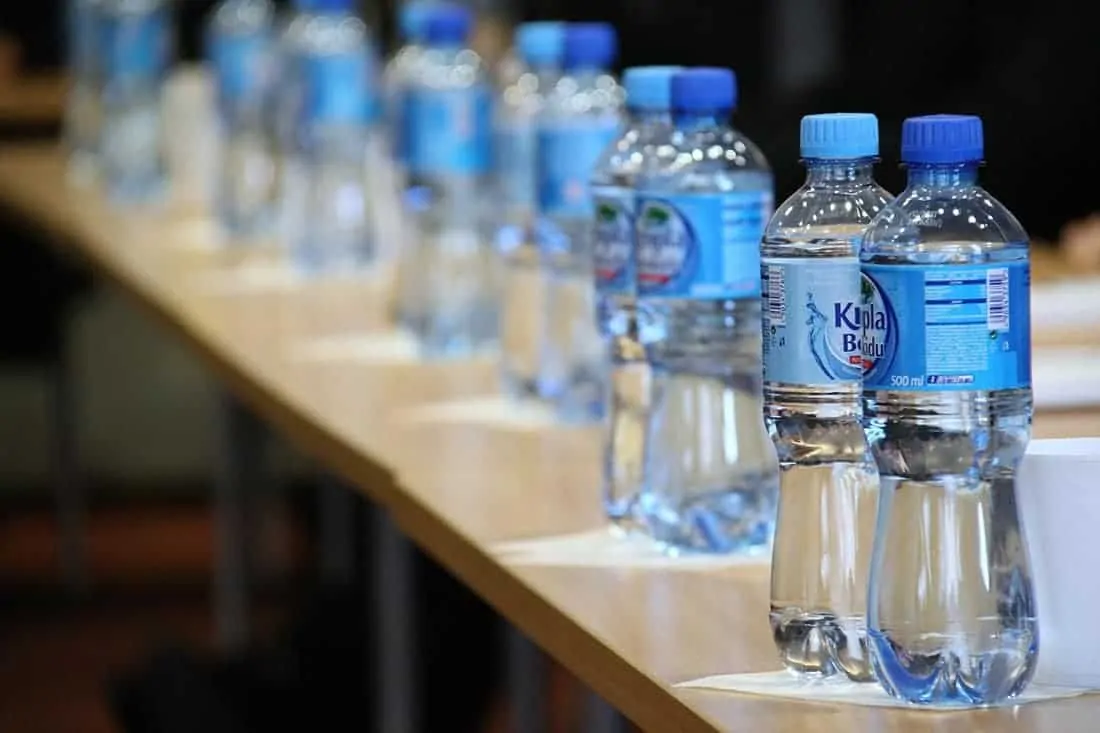
Bottled water has brought convenience and security to those who might not have easy access to clean water. However, privatizing some clean water sources has significant downsides for the residents who live near them.
When a municipal utility source such as public water or electricity struggles to maintain itself due to budgeting issues and poor infrastructure, it'll often sell its rights to a private corporation to take over. While this may seem beneficial in the short term, residents who rely on the water source ultimately suffer.
Because the utility is now owned by a private company rather than a governmental body, the company is now accountable to stockholders, not residents. Residents now no longer have representation in corporate affairs. Instead, a natural monopoly is created where water, the commodity, is sold at a much higher price. Because water is a regional resource, competition for lower prices is unlikely.
Privately owned water sources typically charge households 59% more than publically owned sources (Food and Water). Private sewer services generally are 63% more costly.
Nestle, one of the largest corporations in the world, owns 50 springs throughout the United States (Food Empowerment Project). Bechtel, the fifth-largest corporation in the US, took over the water supply of a region in Bolivia in 1999 and raised rates by 300%, making it impossible for the people of the area to access their water. Coca-Cola pumps 1.5 million liters of water daily from a small town in Plachimada, India, leaving farmers without enough water to make a living.
7) In the US, 2.1 trillion gallons of clean water is lost each year due to poor infrastructure

Poor infrastructure significantly contributes to the loss of clean water and the potential contamination that wastewater can cause. According to the Institute for Water, Environment, and Health, 80% of all wastewater is returned to the environment without proper treatment due to poor wastewater management, and 30% of all clean water is lost through leakage and deteriorating pipes (INWEH).
In the United States alone, 2.1 trillion gallons of clean, treated water is lost yearly due to old, leaky pipes and broken water mains. David Le France, CEO of the American Water Works Association, estimates that repairing America’s water infrastructure will be a trillion-dollar program (NPR).
Water infrastructure is essentially a governance issue. Due to divided efforts in governmental decision-making, adequate policies and budgeting are often challenging.
8) Women walk an average distance of 4 miles every day just to fetch water that is likely contaminated

Gender roles related to water scarcity in developing countries differ from those in the West. Women and young girls are expected to take the responsibility of gathering the needed amount of water to sustain their families daily.
In Africa, 90% of the work involved in gathering water and preparing food is done by women. In both Africa and Asia, women walk an average distance of 4 miles every day, which takes about 6 hours, to carry a 44-pound container of water for their household from a water source that has the potential to make them sick (World Vision, 2022). It is estimated that women and children spend around 200 million hours every day .
9) One-third of the world's largest aquifers are water-stressed

While surface water has been the primary means of collection for human use, groundwater remains an essential clean water source for regions where surface water isn’t as available. Groundwater can be accessed via wells or through groundwater pumping. As part of the hydrologic cycle, groundwater is naturally replenished through rainfall and surface water.
But when the amount of groundwater being extracted exceeds the rate at which it replenishes, it remains in a deficit known as groundwater depletion. Determining the amount of groundwater in the aquifers underneath the earth’s surface is challenging. Still, with satellite technology, scientists can estimate the volume of water that remains.
Water Resources Research categorizes the stress levels of groundwater into four categories: unstressed, human-dominated variable stress, variable stress, and overstressed.
- An unstressed groundwater source has a water table that hasn’t dropped below its average height and is replenishing naturally.
- A human-dominated variable-stressed groundwater source extracts water at a low rate but is still at an adequate water level and replenishes naturally as expected.
- A variable-stressed groundwater source is still being recharged either naturally or artificially but has a water table that has lowered beyond its average height due to excessive water extraction.
- An overstressed groundwater source is not being recharged and has a water table that continues to drop due to excessive extraction.
According to the WRR, 37 of the world’s largest aquifers are variably stressed to overstressed. Eight of them, including the aquifers in Saudi Arabia, North-Western India, and Pakistan, are not being recharged.
10) Meeting the UN's Sustainable Development Goals for the water crisis will cost $114 billion per year

While implementing reasonable plans for providing clean water and rebuilding infrastructure are necessary for addressing the world's concerns, it certainly won't be cheap. The UN has proposed a series of sustainable development goals for a brighter, more self-sustaining future for the earth, with #6 addressing the global water crisis.
While these goals are comprehensive and well-informed, attaining these goals will be time-consuming, expensive, and may face political division. It is estimated that reaching these goals will cost 114 billion dollars annually until 2030.
The truth is that maintaining clean water sources is very expensive. While motives are mostly internally focused, even large corporations spend millions of dollars annually maintaining clean water sources for their production. The British Oil and Gas company spent $938 Million to irrigate water from a gasfield to farming fields in Australia (UN-Water, 2023). Rio Tinto spent $3 Billion on a desalination plant in Chile.
As costly as maintaining the proper sources of clean water may be, the cost of not doing so is also high. $260 Billion is spent globally on addressing healthcare needs due to water-related diseases and poor sanitation (INWEH).
To Summarize
Water scarcity affects every continent and will intensify as the global population grows and climate change reduces freshwater availability. Reducing household water waste is the most direct personal action — the EPA estimates U.S. households leak an average of 10,000 gallons per year, most of it from worn fixtures and running toilets. For broader impact, clean water charities fund access infrastructure in the regions most affected. If you are evaluating your own supply, see our guides on how to purify water for drinking and how to test water quality.
Frequently Asked Questions
What is the difference between water scarcity and water stress?
Water scarcity means a region has insufficient freshwater to meet its basic human and ecological needs — supply falls below 1,000 cubic meters per person per year. Water stress is the broader condition in which demand exceeds available supply at some point during the year, even if annual supply appears adequate. A region can be water-stressed seasonally without being water-scarce year-round.
How many people are currently affected by water scarcity?
Approximately 4 billion people — two-thirds of the global population — experience severe water scarcity for at least one month each year (UN-Water). Of those, 2.2 billion people lack access to safely managed drinking water at any point during the year, meaning their water source is either unprotected, contaminated, or requires more than 30 minutes of travel to reach (WHO/UNICEF JMP, 2022).
What are the main causes of water scarcity?
Four factors drive most water scarcity: agricultural overuse (irrigation accounts for 72% of all water withdrawals globally), population growth that increases municipal demand faster than infrastructure can scale, climate change that disrupts precipitation patterns and accelerates glacial melt, and aging infrastructure that wastes treated water before it reaches households — the U.S. alone loses 2.1 trillion gallons annually to leaking pipes.
Which regions have the worst water scarcity?
Sub-Saharan Africa faces the most acute access gap — women and girls in the region collectively spend 200 million hours per day collecting water. The Middle East and North Africa are the most water-stressed regions globally, with 12 of the 17 most water-stressed countries located there (World Resources Institute). South Asia — particularly India, Pakistan, and Bangladesh — is home to the largest number of people experiencing seasonal water scarcity.
How does climate change make water scarcity worse?
Climate change disrupts the water cycle in two ways simultaneously: it reduces supply by accelerating glacial melt (glaciers supply freshwater to nearly 2 billion people) and altering precipitation patterns, and it increases demand by extending drought seasons. The UN projects that by 2050, drought frequency and severity will displace hundreds of millions of people, particularly in arid and semi-arid regions already near the scarcity threshold.
What is the cost of solving the global water crisis?
Meeting the UN's Sustainable Development Goal 6 — universal access to clean water and sanitation by 2030 — requires an estimated $114 billion in annual investment through 2030 (UN SDG 6). The cost of inaction is also measurable: water-related diseases cost the global economy an estimated $260 billion annually in healthcare spending alone.
Share this post!
References
CEO Water Mandate. (2017, June 17). What Do 'Water Scarcity?, 'Water Stress?, and 'Water Risk? Actually Mean? | CEO Water Mandate. Retrieved from https://ceowatermandate.org/posts/water-scarcity-water-stress-water-risk-actually-mean/
FAO. (n.d.). Coping with water security. Retrieved from http://www.fao.org/3/a-aq444e.pdf
FAO. (n.d.). WATER and PEOPLE: whose right is it? Retrieved from http://www.fao.org/docrep/005/Y4555E/
Food and Water Watch. (2016, July 5). Water Privatization: Facts and Figures. Retrieved from https://www.foodandwaterwatch.org/insight/water-privatization-facts-and-figures
Food Empowerment Project. (n.d.). Water Usage & Privatization | Food Empowerment Project. Retrieved from http://www.foodispower.org/water-usage-privatization/
Global Water Institute. (2013). Future Water (In)security: Facts, Figures, and Predictions. Retrieved from https://img1.wsimg.com/blobby/go/27b53d18-6069-45f7-a1bd-d5a48bc80322/downloads/1c2meuvon_105010.pdf
INWEH. (2017). Global Water Crisis: The Facts. Retrieved from http://inweh.unu.edu/wp-content/uploads/2017/11/Global-Water-Crisis-The-Facts.pdf
National Geographic. (2015, July 9). With One-Third of Largest Aquifers Highly Stressed, It’s Time to Explore and Assess the Planet’s Groundwater – National Geographic Blog. Retrieved from https://blog.nationalgeographic.org/2015/07/09/with-one-third-of-largest-aquifers-highly-stressed-its-time-to-explore-and-assess-the-planets-groundwater/
NPR. (2014, October 29). As Infrastructure Crumbles, Trillions Of Gallons Of Water Lost. Retrieved from https://www.npr.org/2014/10/29/359875321/as-infrastructure-crumbles-trillions-of-gallons-of-water-lost
UNESCO. (2012). 2012 - 4th Edition | United Nations Educational, Scientific and Cultural Organization. Retrieved from http://www.unesco.org/new/en/natural-sciences/environment/water/wwap/wwdr/wwdr4-2012/
UN. (n.d.). Goal 6 Sustainable Development Knowledge Platform. Retrieved from https://sustainabledevelopment.un.org/sdg6
United Nations. (n.d.). Gender Water Sanitation. Retrieved from http://www.un.org/waterforlifedecade/gender.shtml
Water Resources Research. (2015). Quantifying renewable groundwater stress with GRACE. Retrieved from https://agupubs.onlinelibrary.wiley.com/doi/full/10.1002/2015WR017349
WHO. (2017, July 12). 2.1 billion people lack safe drinking water at home, more than twice as many lack safe sanitation. Retrieved from http://www.who.int/news-room/detail/12-07-2017-2-1-billion-people-lack-safe-drinking-water-at-home-more-than-twice-as-many-lack-safe-sanitation
WHO. (2017, July 12). 2.1 billion people lack safe drinking water at home, more than twice as many lack safe sanitation. Retrieved from http://www.who.int/news-room/detail/12-07-2017-2-1-billion-people-lack-safe-drinking-water-at-home-more-than-twice-as-many-lack-safe-sanitation
WHO. (2017). Progress on Drinking Water, Sanitation and Hygiene. Retrieved from http://apps.who.int/iris/bitstream/handle/10665/258617/9789241512893-eng.pdf;jsessionid=330207F9B3CAA25D492D57534953FE93?sequence=1
WHO. (2018, February 7). Drinking-water. Retrieved from http://www.who.int/en/news-room/fact-sheets/detail/drinking-water