Yes, you can drink distilled water, and it’s safe. Here’s what regulators actually say, why the mineral debate is narrow, and how to remineralize if it’s your only source.
Yes, you can drink distilled water, and it is safe to do so. The FDA regulates distilled water as a standard type of bottled water, held to the same quality standard as any other drinking water you buy (FDA, 21 CFR 165.110). No major health authority, not the FDA, EPA, WHO, or CDC, classifies distilled water as unsafe to drink.
The only real question is nutritional, and it is narrow. Distillation removes essentially all minerals, so distilled water gives you none of the small calcium and magnesium that mineralized water contributes. That matters at the dietary margin, mostly for someone using demineralized water as their exclusive long-term source alongside a mineral-poor diet. For everyone else, distilled water is a safe choice, and any mineral gap is easy to close.
Below, we separate what regulators actually say from the myths, so you can decide with real information.
How Distilled Water Is Made
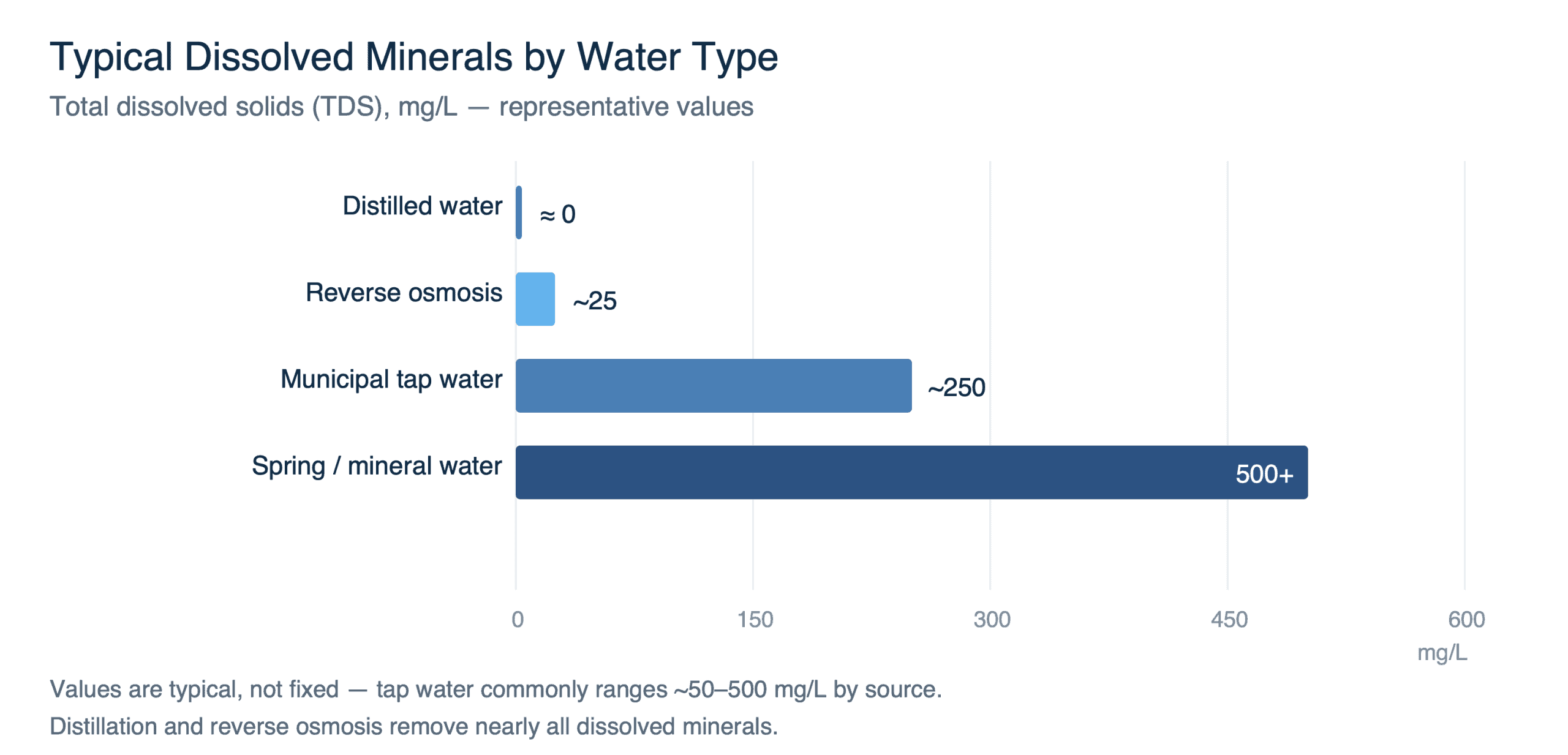
Distillation boils water into steam, then condenses that steam back into liquid in a separate chamber. Minerals, salts, and most contaminants have higher boiling points, so they stay behind. What condenses is close to pure H₂O with near-zero total dissolved solids (TDS).
This is why distilled water is prized for uses where mineral residue causes problems. It is also why the mineral debate exists at all: the same process that strips contaminants also strips beneficial minerals. If you want to produce it at home rather than buy it by the gallon, a countertop unit handles the job. We cover the options in our guide to the best water distillers for home.
The Mineral Question: What WHO Actually Says
The World Health Organization does not say distilled water is unsafe. Its report on demineralised water addresses a different, narrower question: what happens when a population drinks demineralized water as its sole source over the long term, especially where diets are already low in minerals (WHO, 2005).
The concern is forgone intake, not toxicity. Water with minerals contributes a small share of daily calcium and magnesium. Remove all minerals and you lose that share. For populations relying on demineralized supplies with poor diets, WHO's practical recommendation is to remineralize the water by adding calcium and magnesium back (WHO, 2005). Commonly cited targets are modest amounts of each mineral, not large doses.
Read carefully, this is a nutrition recommendation for water systems, not a warning that a glass of distilled water will harm you.
The Leaching Myth, Corrected
A popular claim says distilled water "leaches" minerals out of your body like a magnet, draining you as it passes through. That is not how physiology works. Your kidneys process distilled water the same way they process any water, and a well-nourished body holds its mineral balance regardless of what you drink (WHO, 2005).
The real, evidenced point is about intake, not extraction. You forgo water's small calcium and magnesium contribution, and cooking mineral-rich staples in demineralized water can leach some minerals out of the food into the cooking liquid. Both effects matter only at the dietary margin, not as an acute detox drain. As a small footnote, very-low-mineral water can slightly raise mineral output in urine, but that shift is trivial next to what your diet provides.
Minerals: Water Versus Food
Most of your daily calcium and magnesium comes from food, not water. Mineralized water is a minor and variable contributor, ranging from low single digits up to roughly 20 percent of intake depending on the source. Distilled water contributes essentially zero.
So the practical stakes are small. Losing water's mineral fraction matters most for people whose diets are already short on those minerals. A balanced diet covers the gap easily. This framing is the whole reason "safe" and "optimal as a sole long-term source" are two different questions.
Taste and pH
Distilled water tastes flat because it has no dissolved minerals or gases to give it flavor. That is a sensory trait, not a safety issue. Many people simply prefer the taste of spring or mineral water, which is a fair preference rather than a health verdict.
Distilled water is also mildly acidic, often around pH 5.8, because it absorbs carbon dioxide from the air and forms weak carbonic acid. This is ordinary chemistry. For perspective, normal rain sits near pH 5.6, and your stomach acid is far stronger than any drinking water (USGS, "pH and Water"). Your body buffers the small acidity of what you drink without difficulty.
Legitimate Good Uses
Distilled water's lack of minerals is an advantage in many settings. Because it leaves no scale, it is the recommended water for CPAP machine humidifiers and steam irons, and it is standard in medical, laboratory, and aquarium applications.
It also has a specific role with infant formula. The CDC notes that using low-fluoride water, which includes distilled water, part of the time to mix formula can reduce the chance of mild dental fluorosis in infants (CDC, Community Water Fluoridation FAQ). The more important caveat for infants is water safety and sterility, set against contaminant limits regulators enforce (EPA, National Primary Drinking Water Regulations), not the mineral content itself. Discuss your infant's specific needs with your pediatrician.
Distilled Versus Reverse Osmosis
Reverse osmosis raises the same questions as distillation because both produce demineralized water. RO pushes water through a fine membrane that removes most dissolved solids, leaving low-TDS water similar in mineral profile to distilled. The safe-versus-optimal logic and the remineralization fix apply identically to both.
If you are weighing which system fits your home, the trade-offs in flow rate, cost, and setup differ. We compare them in our guide to the best reverse osmosis system for home.
Who Should Be Cautious, and Who It's Fine For
Distilled water is fine for essentially everyone in normal use. Drinking it, cooking with it, and mixing beverages with it pose no established health risk for a person eating a reasonably balanced diet (WHO, 2005).
The narrow caution applies to two situations. First, someone using demineralized water as their exclusive long-term source while eating a mineral-poor diet. Second, very heavy-sweat athletes replacing large fluid volumes, who lose electrolytes through sweat and should replace them. In both cases the fix is the same: get minerals from food, use an electrolyte source, or remineralize the water. None of this makes distilled water unsafe. It makes minerals worth accounting for.
This article is informational and not a substitute for personalized medical advice. For decisions tied to a specific health condition, talk with your physician or a registered dietitian.
How to Remineralize
If distilled or RO water is your main source and you want the minerals back, three simple methods work:
- Mineral or electrolyte drops: add a measured dose to each container.
- A pinch of trace-mineral salt: a small amount per pitcher adds calcium, magnesium, and other trace minerals.
- A remineralizing filter cartridge: many systems offer a post-filter stage that reintroduces minerals automatically.
Any of these restores the small mineral fraction distillation removes, closing the only real gap the science identifies. For whole-home treatment choices that pair well with remineralization, see our guide to the best water filtration system for home.
Disclosure: World Water Reserve earns a commission on some product links in this article. Our recommendations stand independent of that, and we suggest products on the merits alone.
Key Takeaways
- Distilled water is safe to drink; the FDA regulates it as a standard bottled-water type, and no major authority calls it unsafe.
- The only real consideration is nutritional and narrow: distilled water contributes no calcium or magnesium.
- WHO does not warn against distilled water broadly; it advises remineralizing demineralized supplies used as a sole source, especially with mineral-poor diets.
- The "leaching from your body" claim is a myth; the evidenced issue is forgone mineral intake, which matters only at the dietary margin.
- Most calcium and magnesium comes from food, so a balanced diet closes any gap easily.
- Distilled water's flat taste and mild acidity (around pH 5.8) are normal chemistry, not health concerns.
- Good uses include CPAP machines, steam irons, medical and lab settings, aquariums, and, part of the time, infant formula.
- Reverse osmosis water raises the same questions and takes the same fix.
- If distilled water is your main source, remineralize with mineral drops, trace-mineral salt, or a remineralizing cartridge.
Share this post!