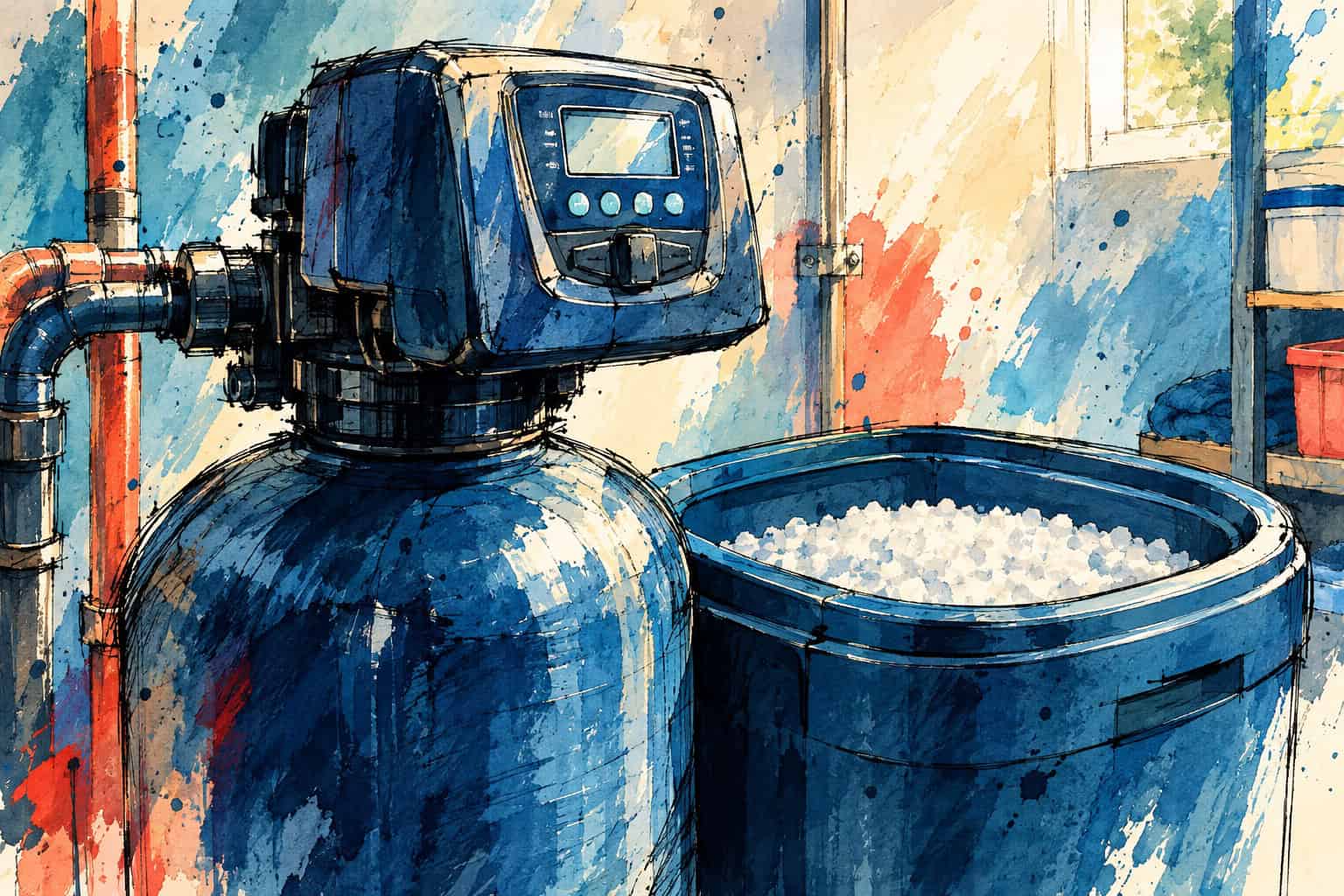
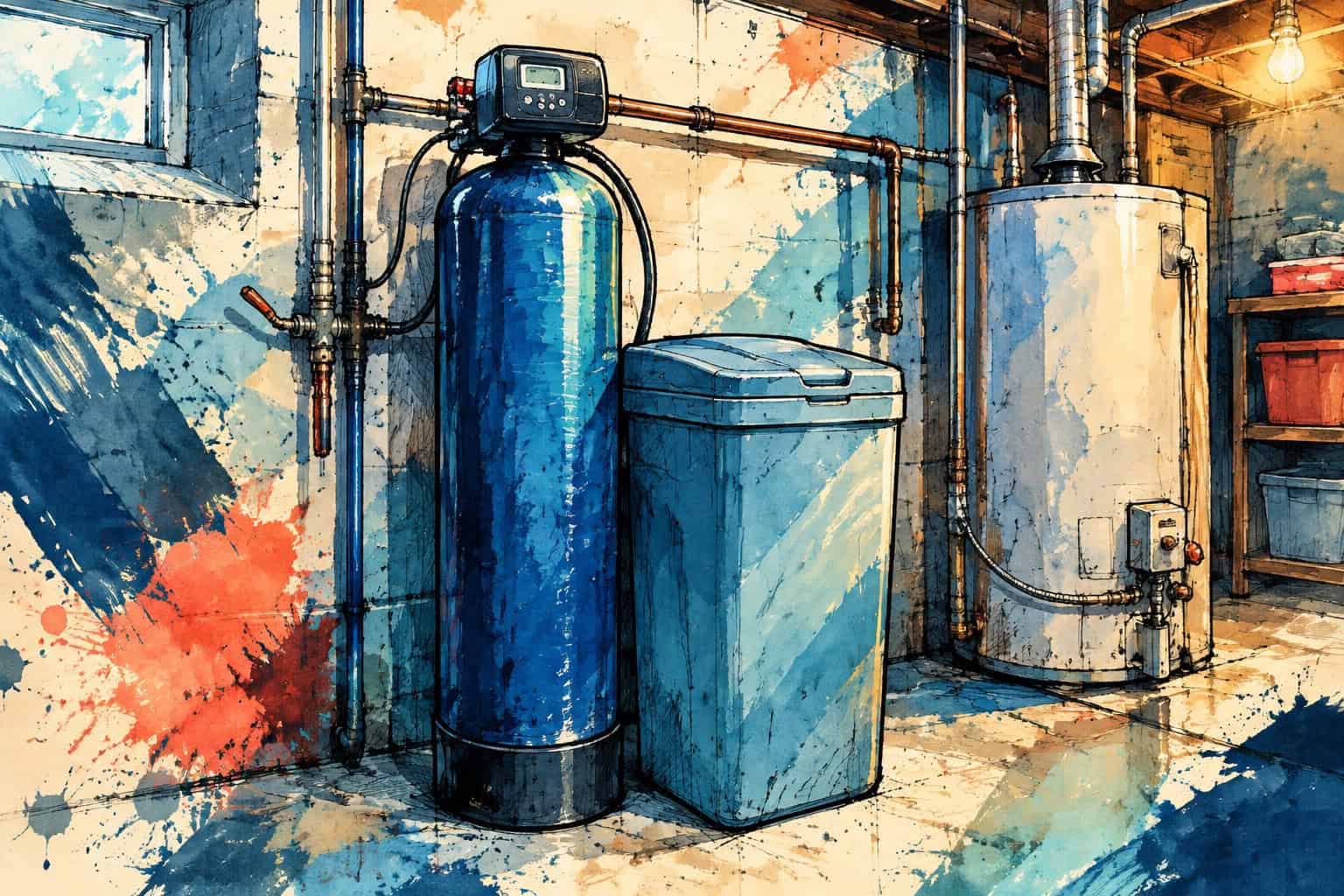
Cleaning a water softener means maintaining three things: the brine tank, the resin bed, and sanitizing the system. Here are the steps, the salt-bridge fix, and how often to do each.
Cleaning a water softener really comes down to maintaining three things: the brine (salt) tank, the resin bed, and sanitizing the system. Clean the brine tank about once a year, draining it, breaking up any salt bridge or mushy salt, scooping out the sludge, scrubbing, rinsing, sanitizing, and refilling.
Use a resin-bed cleaner periodically, especially if your water has iron, to clear fouling that normal salt regeneration leaves behind. Sanitize the system with a small, measured amount of plain unscented bleach run through a regeneration cycle if it develops a musty smell. And clean the venturi/injector if regeneration weakens and hard water starts creeping back. One rule ties it all together: follow your softener's manual, because the exact amounts and steps vary by brand.
The Three Things to Keep Clean
Think of softener maintenance in three buckets, and most problems map neatly onto one of them:
- The brine tank collects sediment and can develop a salt bridge or mushy salt that stops it from making brine.
- The resin bed does the actual softening and can foul with iron and manganese over time.
- Sanitation matters if the system develops odor or bacteria.
Here is how to handle each.
How to Clean the Brine Tank
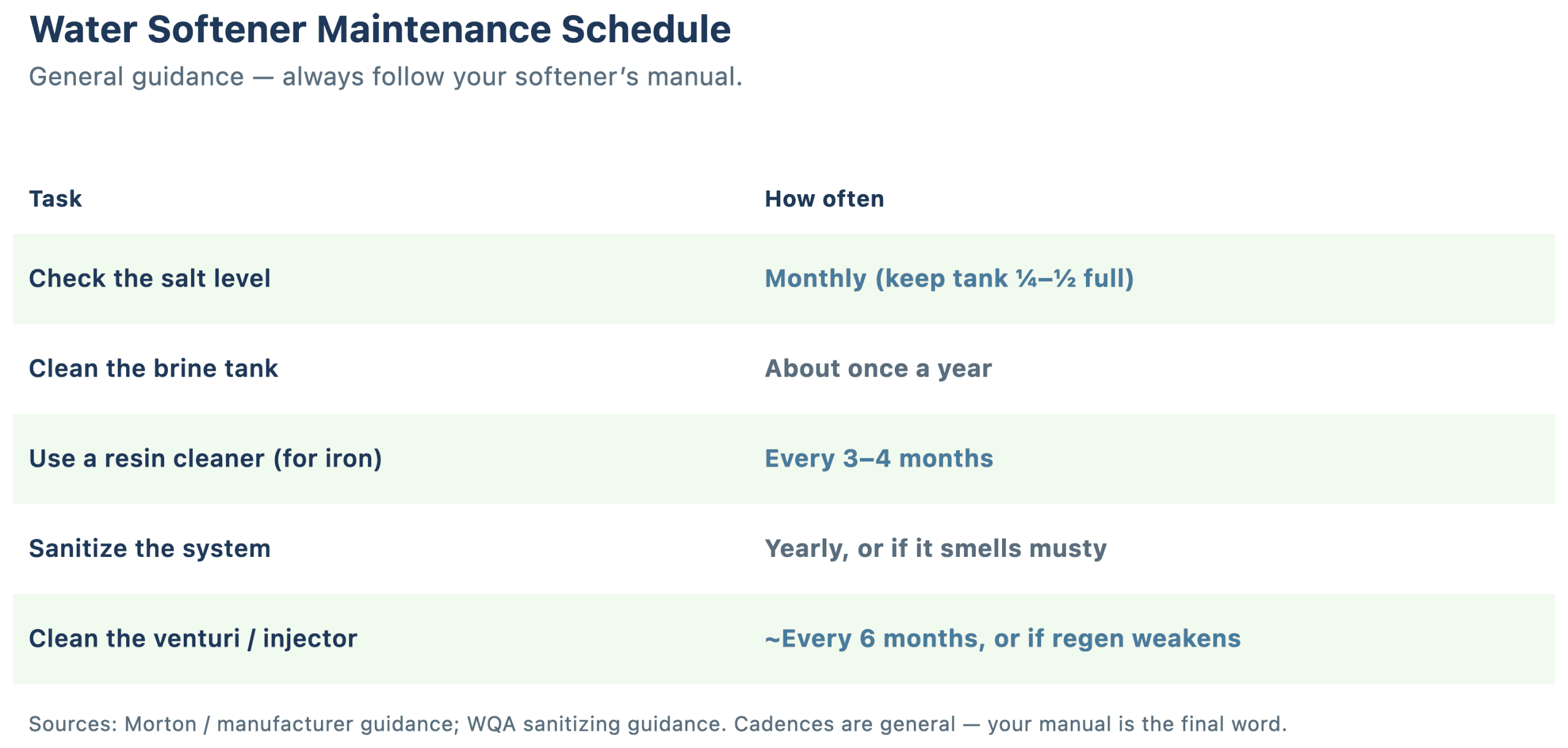
The brine tank is the most common cleaning job, and roughly once a year is a good cadence (some units go two to three years if you use clean pellet salt). Do it when the salt is low so the tank is light and easy to work in.
- Bypass the softener. Set the valve to bypass so no water flows through while you work.
- Remove the salt. Scoop or shop-vac out the remaining salt.
- Take out the brinewell. Unscrew and lift out the brinewell tube.
- Drain the water left in the bottom of the tank.
- Remove the sludge and wash the inside with warm water and dish soap. A vinegar rinse helps with mineral film.
- Rinse thoroughly.
- Sanitize the tank (see below).
- Refill with salt and a few gallons of clean water, return the valve to service, and run a manual regeneration.
Salt Bridge vs. Salt Mushing
Two salt problems look similar but need different fixes.
A salt bridge is a hard crust that forms above the water, leaving a hollow air gap so the salt below can't dissolve into brine, and without brine, the softener can't regenerate. To check for one, Morton recommends taking "a broom handle, or like tool, and push it straight down into the salt." If you hit a hard layer, carefully push into it in several spots to break it up. For a stubborn bridge, pouring a couple of gallons of hot water into the brinewell and waiting helps loosen it. Critical safety note: Morton warns, "DO NOT use any sharp or pointed objects to break a salt bridge as you may puncture the tank." Use a broom handle, not a screwdriver.
Salt mushing is different, it's a sludgy, recrystallized layer at the bottom of the tank that clogs the intake. Poking won't fix mushing; you have to empty and clean the tank. To prevent both, use clean pellet or coarse solar salt (low in impurities) rather than cheaper rock salt.
Cleaning the Resin Bed
The resin beads that soften your water can foul with iron and manganese, which normal salt regeneration doesn't fully clear. When that happens, softening capacity drops even with plenty of salt in the tank. The fix is a water-softener resin cleaner (an iron/rust remover), added to the brine well per the product's directions and then run through a regeneration.
This matters most for homes with iron in their water. As a general cadence, using a resin cleaner every few months is typical, and more often, roughly monthly, for high-iron well water. Follow the cleaner's label and adjust to your iron level. (If iron is a bigger problem, you may need dedicated iron treatment upstream of the softener.)
Sanitizing the System
If your softened water develops a musty or off smell, sanitize the system. The common DIY method is to add a small measured amount of plain, unscented household bleach to the brine well, then run a manual regeneration so it circulates through the resin and tank.
How much bleach? This is where you must check your manual, because the right amount depends on your softener's resin volume. As a general guide, based on WQA sanitizing guidance, it works out to roughly a couple of tablespoons of 5.25% bleach per cubic foot of resin, which is about 1 to 2 ounces for a typical home softener and around 3 ounces for larger units. Three cautions:
- Use plain, unscented bleach only, never scented, "splashless," or concentrated versions. Their thickeners coat the resin beads and are nearly impossible to rinse out.
- Don't overdose or leave bleach sitting in the resin for more than about an hour, which can permanently damage it. About an hour of contact through a regeneration is plenty.
- Rinse it through, run a cold downstream tap for several minutes afterward until the water is clear.
One important caveat: some brands say not to use bleach at all. Culligan, for example, directs owners to use its own sanitizing product rather than bleach. So treat bleach as the general DIY method unless your manual says otherwise.
Cleaning the Venturi/Injector
If your softener stops drawing salt and hard water returns, the culprit is often a clogged venturi injector, the small nozzle that creates the suction to pull brine into the resin tank during regeneration. Sediment, iron, or salt debris can block it.
To clean it: put the softener in bypass to relieve pressure, remove the cover and unscrew the venturi cap (keep track of the small O-ring), wash the parts in warm soapy water, rinse, and reassemble hand-tight, do not over-tighten. Morton notes "a clean nozzle and venturi are important for your water softener to work properly." Checking it every six months or so, and any time regeneration weakens, keeps the system drawing brine reliably.
Safety Notes and When to Follow the Manual
A few rules keep this safe and effective:
- Unscented bleach only, and never mix it with other cleaners.
- After sanitizing, softened water is fine again once the system has regenerated and flushed. (Remember, softening isn't the same as purifying your drinking water.)
- Procedures and amounts vary by brand, so your owner's manual is the final word.
Keeping up with this maintenance is what makes a softener last. If yours is beyond cleaning up, or you're weighing a new one, see our guide to the best water softeners and whether you even need a water softener in the first place.
Disclosure: This article is informational. World Water Reserve may earn a commission from qualifying purchases made through links on this page, at no extra cost to you.
Key Takeaways
- Cleaning a water softener means maintaining three things: the brine tank, the resin bed, and sanitizing the system.
- Clean the brine tank about once a year: bypass, remove salt, drain, remove sludge, scrub with warm soapy water, rinse, sanitize, and refill.
- A salt bridge is a hard crust breaking it up with a broom handle (never a sharp object, which can puncture the tank) fixes it; salt mushing means emptying and cleaning the tank.
- Use a resin cleaner periodically, especially with iron in your water, to clear fouling that salt regeneration leaves behind.
- Sanitize with a small, measured amount of plain unscented bleach (amount depends on resin volume, so check your manual) run through a regeneration; don't leave bleach in longer than about an hour.
- Some brands, like Culligan, say not to use bleach, so always follow your manual.
- Clean the venturi/injector if regeneration weakens and hard water returns.
Share this post!