We compared 5 countertop reverse osmosis systems. Our top pick, the AquaTru, is IAPMO-certified to reduce 84 contaminants, including lead and PFOA/PFOS.
Our product recommendations are made through independent research based on certifications, specs, and real-world use, and we hands-on test select products (noted on the ones we've tested). Some links are affiliate links; if you buy, we may earn a commission at no cost to you. Read our affiliate disclaimer here.
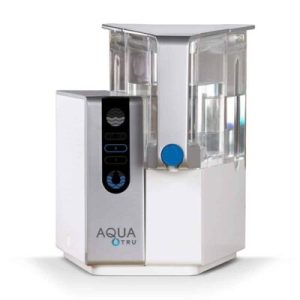
The short answer: the AquaTru Classic is the best countertop reverse osmosis system for most homes. It is the only pick here certified to reduce lead and PFOA/PFOS. Like every unit here, it needs no plumbing. The Waterdrop K19-SFK costs the least to run, about $79 a year in filters. For hot and cold water from one unit, choose the RKIN U1.
A countertop RO system uses the same membrane technology as an under-sink reverse osmosis water filter, but it needs no plumbing. We compared five systems on certification, running cost, water waste, setup, and daily output.
Best Countertop Reverse Osmosis Systems
Here are the five picks at a glance. Read the certification column closely: only one pick is certified for lead and PFAS reduction.
| System | Price | Certification | Pure-to-Drain | Best For | Check Price |
|---|---|---|---|---|---|
| AquaTru Classic | ~$475 | IAPMO: NSF/ANSI 42, 53, 58, 401 (lead, PFOA/PFOS, and more) | About 3:1 (75%) | Certified lead and PFAS reduction | Check price on Amazon → |
| Waterdrop K19-SFK | ~$349 | IAPMO: NSF/ANSI 58 (TDS only) | 3:1 | Lowest filter cost; city water | Check price at Waterdrop → |
| RKIN U1 | ~$675 (sale; ~$1,125 list) | Not certified (third-party tested) | 1:1 | Hot, cold, and mineral water | Check price at RKIN → |
| Bluevua ROPOT-Lite(UV) | ~$369 | WQA: NSF/ANSI 58 (TDS, cadmium, chromium-3) | 3:1 | Glass carafe; one or two people | Check price at Bluevua → |
| SimPure Y7P | ~$370 | Not certified (SGS lab-tested) | 4:1 (stated) | Least water waste; high output | Check price at SimPure → |
Prices retrieved October 2026. Several makers run frequent sales and on-page codes.
AquaTru Classic: Best Overall

- Price: ~$475 for the Classic; ~$375 for the glass Carafe version.
- Certification: IAPMO-certified to NSF/ANSI 42, 53, 58, and 401, plus 372 for lead-free materials. Its PFOA/PFOS claim is certified under NSF/ANSI 53.
- Removal: certified to reduce 84 contaminants. In AquaTru's performance data, lead reduction averaged 99.1% and fluoride 93.5%, and PFOA/PFOS reduction was at least 97.5%.
- Filtration: four stages: sediment, carbon, the RO membrane, and a VOC carbon filter.
- Efficiency: AquaTru rates the Classic at 75%, about 3:1.
- Speed and size: about a gallon every 10 to 15 minutes. The tap tank holds about a gallon; the clean tank holds about 3 quarts.
AquaTru: Strengths and Trade-offs
Strengths: The AquaTru is the only pick here with certified lead and PFOA/PFOS reduction. An independent body verified those results, so you aren't relying on the maker's word. An optional mineral-boost filter adds calcium and magnesium back. The Carafe version stores purified water in a 64 oz glass carafe instead of plastic.
Trade-offs: It is not instant. You wait 10 to 15 minutes per gallon. The clean tank holds about 3 quarts, so a household that uses more than 3 quarts a day refills it during the day. Filters run about $130 a year. The Carafe's filters are rated for half the gallons, so it costs more to run.
Best for: anyone who wants verified lead and PFAS reduction without installing anything.
Waterdrop K19-SFK: Best Value
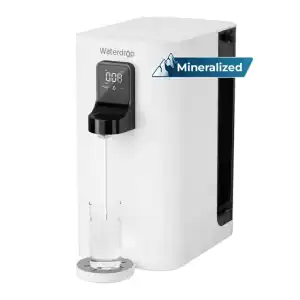
- Price: ~$349. In October 2026, Waterdrop's product page showed a code that brought it to about $239.
- Certification: IAPMO-certified to NSF/ANSI 58 for TDS reduction only. Waterdrop's lead, fluoride, and PFAS claims come from third-party lab tests, not certification.
- Filtration: seven stages in one cartridge, including a remineralization stage, plus a built-in UV light.
- Efficiency: 3:1.
- Output: about 75 gallons a day, at room temperature only.
- Tank and feed water: a 170 oz source tank. The manual calls for municipal tap water under 500 ppm TDS.
Waterdrop K19-SFK: Strengths and Trade-offs
Strengths: It has the lowest filter cost here. One cartridge lasts 12 months or 1,100 gallons and costs about $79. It is certified to NSF/ANSI 58 for TDS, and it adds minerals back after filtering.
Trade-offs: The certification covers TDS only. For documented lead or PFAS reduction, the AquaTru is the stronger choice. There is no hot or cold water, and Waterdrop's manual specifies municipal tap water.
Best for: city-water households that want a certified RO unit with the lowest running cost.
RKIN U1: Best for Hot and Cold Water
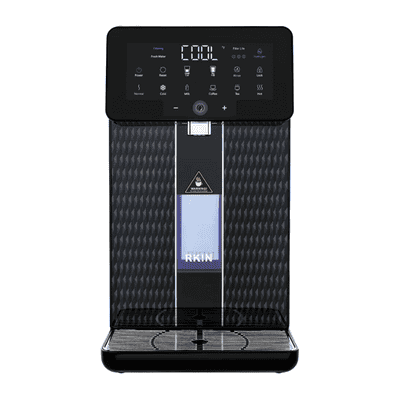
- Price: ~$675 on sale (regular ~$1,125). RKIN lists it as a pre-order shipping in early November.
- Certification: none. RKIN says the U1 is third-party tested for TDS, fluoride, lead, PFOA/PFOS, and chromium.
- Filtration: five stages: sediment, carbon, the RO membrane, an alkaline mineral filter, and hydrogen infusion. A UV light keeps stored water fresh.
- Temperatures: ambient, cold (59°F), and hot up to 212°F.
- Efficiency: 1:1. Half a gallon drains for every half gallon purified.
- Speed: half a gallon in under 7 minutes.
RKIN U1: Strengths and Trade-offs
Strengths: It is the only pick that both heats and chills water. Minerals go back in after filtering, so the water tastes less flat.
Trade-offs: It is not certified, so its removal results rest on lab tests RKIN commissioned. At 1:1 it wastes the most water here. Filters cost about $186 a year on RKIN's longest intervals, or about $331 if the pre-, post-, and hydrogen filters need changing every 6 months. The hydrogen stage has no certification for any health benefit.
Best for: households that want hot, cold, and mineral-balanced water from one countertop unit and accept the higher cost.
Bluevua ROPOT-Lite(UV): Best Glass-Carafe Pick
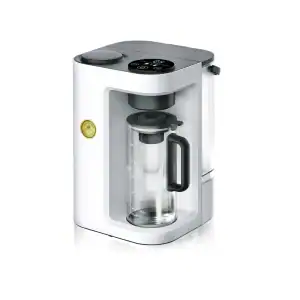
- Price: ~$369 list. A Bluevua sale brought it to about $277 in October 2026.
- Certification: WQA Gold Seal to NSF/ANSI 58 for TDS, cadmium, and trivalent chromium, plus NSF/ANSI 372 for materials. Lead and PFAS are not certified claims for this model.
- Filtration: seven stages: a 5-in-1 cartridge (two sediment stages, carbon, the RO membrane, and post-carbon), a UV-LED, and a mineral filter in the carafe lid.
- Carafe: 40 oz borosilicate glass, so purified water never sits in a plastic tank.
- Efficiency: 3:1.
- Speed: a full carafe in under 3 minutes, per Bluevua.
Bluevua ROPOT-Lite(UV): Strengths and Trade-offs
Strengths: It pairs NSF/ANSI 58 certification with glass storage. Bluevua says its UV-LED "helps address microorganisms" after filtering. Filters run about $114 a year: one cartridge plus a pair of mineral filters.
Trade-offs: The certification covers TDS and two metals only. Its lead and PFAS claims are Bluevua's own. The 40 oz carafe suits one or two people, and the display shows output TDS only.
Best for: one or two people on treated city water who want glass storage and a certified RO unit.
SimPure Y7P: Most Water-Efficient
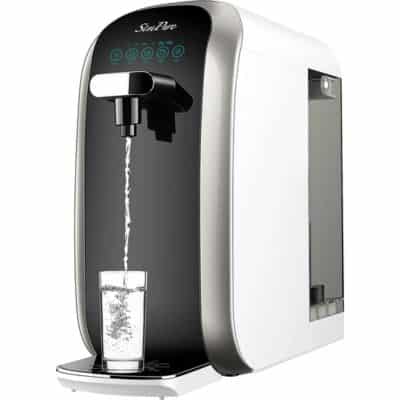
- Price: ~$370 list. SimPure's on-page code brings it to about $270.
- Certification: none. SGS ran selected tests in 2022 using NSF/ANSI 58 methods, at the start of filter life only.
- Filtration: five stages per SimPure, in two cartridges (sediment and carbon, then RO), plus a UV LED.
- Efficiency: a stated 4:1, the best here.
- Output: up to 100 gallons a day.
- Filters: both cartridges every 6 months, about $100 a year.
SimPure Y7P: Strengths and Trade-offs
Strengths: It wastes the least water here, and SimPure rates it at up to 100 gallons a day, the same as the Bluevua. SimPure says it alerts you when a filter is due.
Trade-offs: It is not certified. SimPure's spec table claims NSF 58 certification, but no certifier lists the Y7P. SimPure doesn't list a remineralization stage for the Y7P, and feed water should be under 500 ppm TDS.
Best for: city-water households that want RO plus UV with the least water waste and accept lab-tested results.
What It Costs to Run
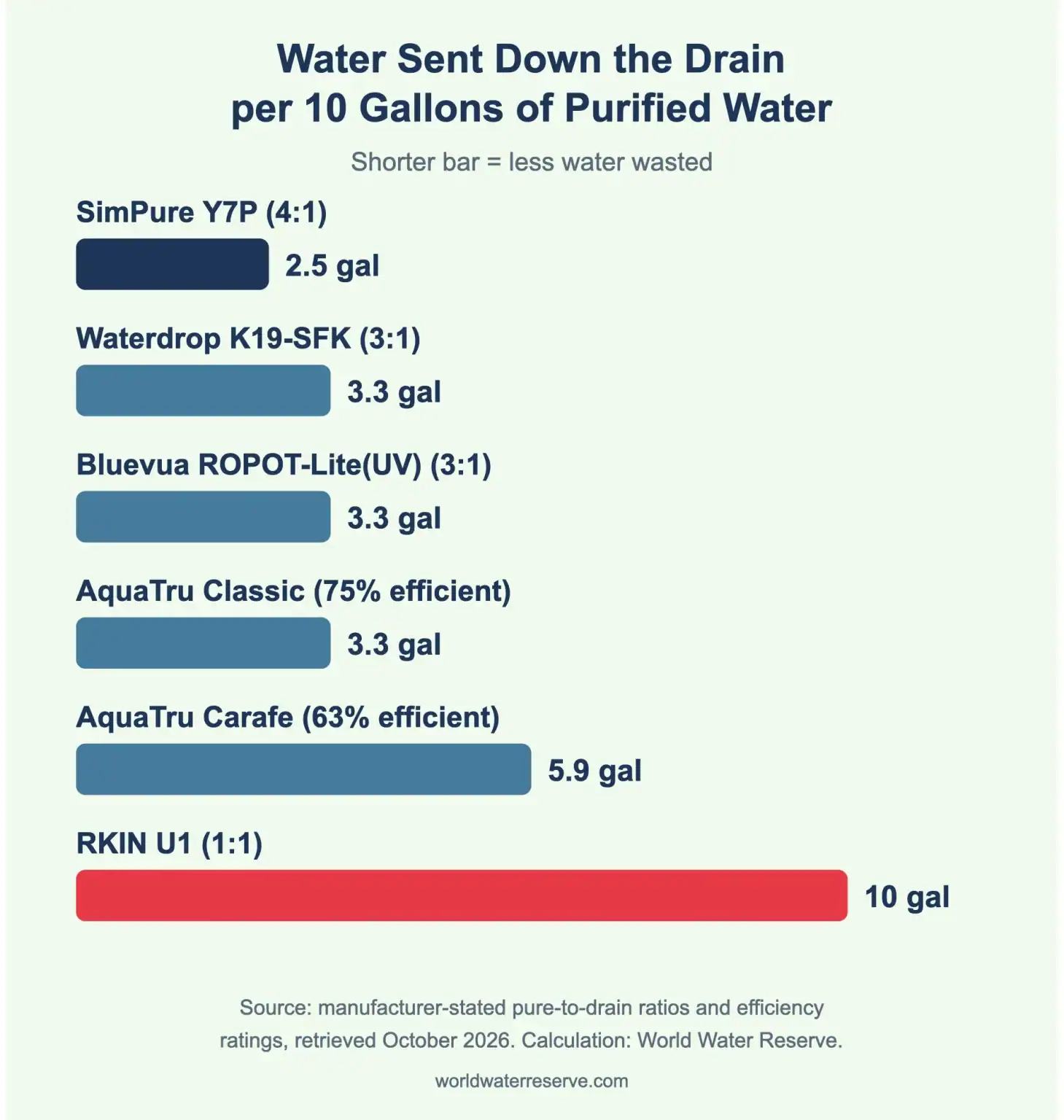
The purifier price is only part of the cost. We calculated what each system costs to run for a year at the same daily use, from each maker's filter prices and replacement schedule.
| System | Filters per Year* | Filter Cost per Gallon* | Drain Water per 10 Gal Purified |
|---|---|---|---|
| Waterdrop K19-SFK | ~$79 | ~$0.14 | 3.3 gal |
| SimPure Y7P | ~$100 | ~$0.18 | 2.5 gal |
| Bluevua ROPOT-Lite(UV) | ~$114 | ~$0.21 | 3.3 gal |
| AquaTru Classic | ~$130 | ~$0.24 | 3.3 gal |
| AquaTru Carafe | ~$188 | ~$0.34 | 5.9 gal |
| RKIN U1 | ~$186 to $331 | ~$0.34 to $0.60 | 10 gal |
*At 1.5 gallons a day, about 550 gallons a year. We used each maker's replacement-filter price and its stated interval, whichever comes first: months or gallons.
For example, a two-person household that drinks and cooks with 1.5 gallons a day purifies about 550 gallons a year. Over that year, the SimPure would send about 140 gallons down the drain. The RKIN U1 would send about 550.
Here, the cheapest unit to buy, the K19-SFK, is also the cheapest to own. Of the five picks, the RKIN U1 costs the most up front and the most to run. The AquaTru Carafe's filters are rated for half the gallons of the Classic's, so it costs about $58 more a year at this level of use.
How the Top Picks Compare Head-to-Head
AquaTru vs Bluevua
Both are tank-fill units that run at about 3:1, but their certifications differ in scope. IAPMO certifies the AquaTru for lead, PFOA/PFOS, and dozens of other contaminants. WQA certifies the Bluevua ROPOT-Lite(UV) to NSF/ANSI 58 for TDS, cadmium, and trivalent chromium only. The Bluevua stores water in glass and adds UV and minerals.
Bottom line: pick the AquaTru for documented lead or PFAS reduction. Pick the Bluevua for a smaller glass-carafe unit on treated city water.
AquaTru vs Waterdrop K19-SFK
Both hold IAPMO certification to NSF/ANSI 58 and run at about 3:1. The difference is scope. The AquaTru is also certified for lead and PFOA/PFOS, while the K19-SFK's certification covers TDS only. The Waterdrop costs less to buy (~$349 vs ~$475) and less to run (about $79 vs $130 a year in filters), and it adds minerals back.
Bottom line: choose the AquaTru when you need certified lead or PFAS reduction. Choose the K19-SFK for treated city water at the lowest running cost.
➡ Check the Waterdrop K19-SFK price
SimPure Y7P vs AquaTru
The SimPure wastes less water (a stated 4:1) and makes more per day (up to 100 gallons, vs 54 for the AquaTru Classic). It also costs less to run, about $100 a year in filters. But it is lab-tested, not certified. The AquaTru carries independent certification for lead and PFOA/PFOS.
Bottom line: the SimPure suits city-water users who care most about efficiency and cost. The AquaTru is the pick when certified removal matters.
AquaTru Carafe vs Bluevua ROPOT-Lite(UV)
This is the matchup for buyers who want to keep purified water out of plastic, and both store it in glass. The AquaTru Carafe holds 64 oz and carries the same IAPMO certifications as the Classic, including lead and PFOA/PFOS. The Bluevua holds 40 oz and is certified for TDS, cadmium, and trivalent chromium. The Bluevua is more efficient (3:1 vs about 1.7:1 for the Carafe) and cheaper to run (about $114 vs $188 a year).
Bottom line: pick the AquaTru Carafe for glass storage backed by certified lead and PFAS reduction. Pick the Bluevua for glass storage at a lower running cost.
How We Chose These 5 Systems
Methodology: this guide is research-based. We compared published certifications, specifications, and prices rather than bench-testing each unit. We analyzed certification listings from IAPMO, WQA, and NSF, each maker's spec sheets, and filter prices retrieved in October 2026.
Every system was judged on the same five points:
- Certification. NSF/ANSI 58 is the standard for reverse osmosis systems. We label each unit plainly: independently certified, lab-tested against a standard, or maker-claimed only. Only the AquaTru is certified for lead and PFOA/PFOS. The Waterdrop K19-SFK holds NSF/ANSI 58 certification for TDS only, and the Bluevua ROPOT-Lite(UV) for TDS, cadmium, and trivalent chromium. The RKIN U1 and SimPure Y7P are lab-tested, not certified.
- Running cost. We calculated each unit's yearly filter cost at the same daily use. The numbers are in What It Costs to Run.
- Water efficiency. We compared how much water each unit sends down the drain for every gallon it purifies.
- Setup. All five sit on the counter and need no plumbing. You fill a tank and plug them in.
- Daily output. We checked tank size and filtering speed against the needs of a household of two to four.
Questions about how we review products? Contact us, or read more about us.
How Countertop Reverse Osmosis Works
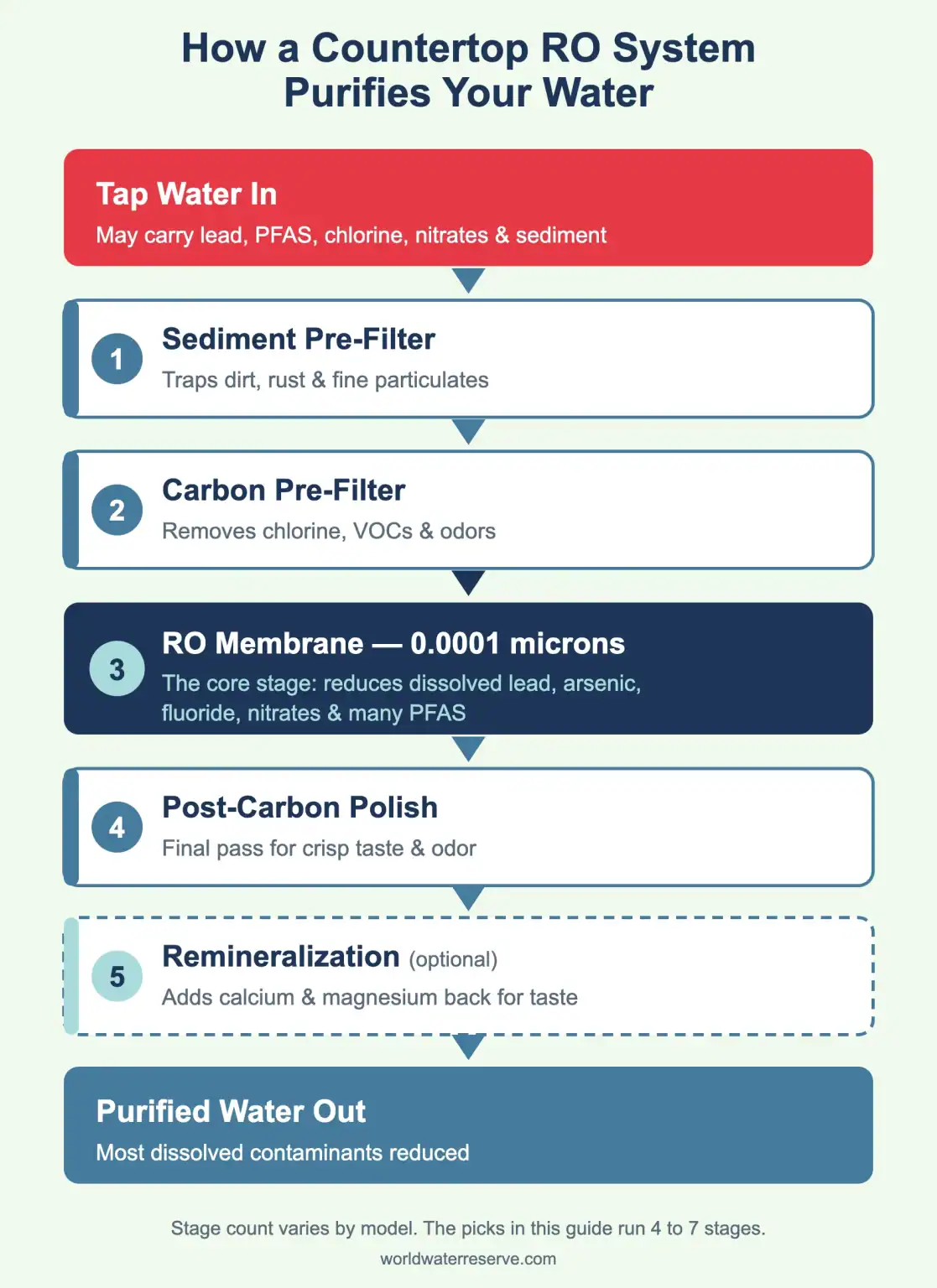
Reverse osmosis (RO) is a filtration method that pushes water through a membrane with pores about 0.0001 microns wide. The membrane blocks most dissolved contaminants, and they are flushed away. On countertop units, that reject water collects in a waste tank or returns to the source tank.
A countertop RO system is a self-contained unit that runs this process on your counter. You fill its source tank by hand, and a small pump does the rest. It suits renters and anyone who can't modify plumbing. For whole-home options, see our guide to home water filtration systems.
The Filtration Stages
The membrane does the heavy lifting. Lead, fluoride, nitrate, and arsenic are among the optional reduction claims under NSF/ANSI 58. Some systems, such as the AquaTru, are also certified to reduce PFAS "forever chemicals" like PFOA and PFOS under NSF/ANSI 53.
Pre-filters for sediment and carbon come first. They catch grit and chlorine, which protects the membrane. A post-filter then polishes taste. Some units add a stage that puts minerals back.
Why Choose Countertop RO
- Broad removal: RO reduces dissolved metals, salts, and many chemicals that a basic pitcher filter leaves behind.
- No plumbing: it works in rentals, apartments, dorms, and RVs, and it moves with you.
- Less bottled water: a refillable tank replaces single-use bottles.
- Better taste: removing chlorine and sediment improves taste and smell.
What to Look For in a Countertop RO System
Four factors decide how well a unit performs and what it costs to own.
Key Buying Factors
- Certification: look for independent certification to NSF/ANSI 58 from IAPMO, WQA, or NSF. That certification is what backs a removal claim.
- Water efficiency: the pure-to-drain ratio tells you how much water goes down the drain. At 4:1, about one gallon drains for every four you drink. At 1:1, one gallon drains for every gallon.
- Filter costs: the sticker price is only the start. Pre-filters usually last 6 to 12 months. Membranes in this guide last from 6 months (SimPure) to 2 years (AquaTru), so price the replacement sets.
- Tank size and speed: check how much purified water the unit holds and how fast it makes more. Bigger households need both.
Total dissolved solids (TDS) is a measure of everything dissolved in your water, in parts per million. Many units show TDS on a display. A TDS meter lets you confirm the reading yourself.
Design, Noise, and Extras
- Footprint: measure your counter before you buy.
- Noise: the pump hums while filtering. If quiet matters, read owner reviews on noise.
- Maintenance: favor tool-free filter changes and a filter-life indicator.
- Remineralization: RO removes minerals along with contaminants. A remineralization stage adds calcium and magnesium back for taste.
- Smart features: some units add TDS readouts, filter alerts, and app control.
Matching a System to Your Water
Start with your local water quality report or a home test. Then match the system to what is actually in your water.
Hard Water and Scale
Hard water carries dissolved calcium and magnesium, according to the USGS. Both are dissolved solids, and reducing total dissolved solids is the core claim of NSF/ANSI 58. That is why RO-filtered water leaves far less scale in kettles and coffee makers. Check the feed-water limit first: the K19-SFK and SimPure Y7P call for feed water under 500 ppm TDS. AquaTru's performance data sheet doesn't recommend the Classic for water harder than 10 grains per gallon unless it is softened first.
Lead and PFAS
Match the certification to your concern. NSF/ANSI 53 covers lead, and some systems are certified under it for PFOA and PFOS, as the AquaTru is. NSF/ANSI 401 covers emerging contaminants such as some pharmaceuticals. Use our water testing guide before you pay for features you don't need.
Remineralization
Plain RO water can taste flat because the minerals are gone. A remineralization stage adds calcium and magnesium back after filtering. In this guide, the RKIN U1, Waterdrop K19-SFK, and Bluevua ROPOT-Lite(UV) include one, and AquaTru sells an optional mineral filter. Treat "alkaline" and "healthy mineral" marketing with care unless the maker publishes test data.
Frequently Asked Questions
Are countertop RO systems worth the investment for purified water?
Yes, if you have a documented concern such as lead or PFAS and can't install an under-sink system. Of the picks here, only the AquaTru is certified for both. At 1.5 gallons a day, filters for the systems here cost about $0.14 to $0.34 per gallon (up to about $0.60 on the RKIN with 6-month changes). The trade-offs are counter space and drain water: these units drain between about a quarter gallon and a full gallon for each gallon purified.
Which countertop reverse osmosis system is best for overall contaminant reduction?
The AquaTru Classic. It is the only pick here certified to reduce lead and PFOA/PFOS. IAPMO lists it under NSF/ANSI 42, 53, 58, and 401. The EPA limit for PFOA and PFOS in public water is 4 parts per trillion each. In May 2026, the EPA proposed letting water systems request more time to comply, up to 2031. The Waterdrop K19-SFK is also certified to NSF/ANSI 58, but for TDS only. The Bluevua ROPOT-Lite(UV) is certified to NSF/ANSI 58 for TDS, cadmium, and trivalent chromium.
How often do you change filters on a countertop RO system?
It depends on the model and how much water you use:
- AquaTru Classic: pre-filter every 6 months or 600 gallons; VOC filter every 12 months or 600 gallons; RO membrane every 24 months or 1,200 gallons.
- Waterdrop K19-SFK: one cartridge every 12 months or 1,100 gallons.
- Bluevua ROPOT-Lite(UV): the 5-in-1 cartridge every 12 months; mineral filters every 6 months.
- SimPure Y7P: both cartridges every 6 months.
- RKIN U1: most filters every 6 to 12 months; the RO membrane every 12 to 24 months.
To estimate your own timeline, divide a filter's rated gallons by your daily use.
What are the cons of a countertop reverse osmosis system?
The main trade-offs:
- Drain water: the units here drain from about a quarter gallon (SimPure, stated 4:1) to a full gallon (RKIN U1, 1:1) for every gallon purified.
- Power: every tank-fill unit needs an outlet.
- Counter space: they are larger than pitcher filters and need a dedicated spot.
- Mineral removal: RO strips calcium and magnesium along with contaminants. Some units add them back.
- Batch filtering: you wait for each tank, about 10 to 15 minutes per gallon on the AquaTru Classic, so big households plan refills.
Is reverse osmosis water healthy to drink, or does it remove beneficial minerals?
RO does remove most dissolved minerals, including calcium and magnesium, along with the contaminants. If you want those minerals in your water, choose a unit with a remineralization stage. The RKIN U1, Waterdrop K19-SFK, and Bluevua ROPOT-Lite(UV) include one, and AquaTru sells an optional mineral filter. For questions about your own health or diet, ask your doctor.
Key Takeaways
- Best overall: the AquaTru Classic (~$475). It is the only pick here certified by IAPMO to reduce lead and PFOA/PFOS.
- Lowest running cost: the Waterdrop K19-SFK, about $79 a year in filters. It is certified to NSF/ANSI 58 for TDS only.
- Hot and cold water: the RKIN U1 (~$675). It is not certified, and it drains a gallon for every gallon purified.
- Glass storage for one or two people: the Bluevua ROPOT-Lite(UV), certified to NSF/ANSI 58 for TDS, cadmium, and trivalent chromium.
- Least water waste: the SimPure Y7P at a stated 4:1, though it is lab-tested rather than certified.
- On a well: get your water tested first. Private wells can carry bacteria and other contaminants, according to the EPA. Some units, such as the Waterdrop K19-SFK, are specified for municipal tap water only.
Share this post!