A water softener removes the calcium and magnesium in hard water, which means longer-lasting appliances, spot-free dishes, less soap, and softer skin and laundry. Here are the benefits, and the tradeoffs.
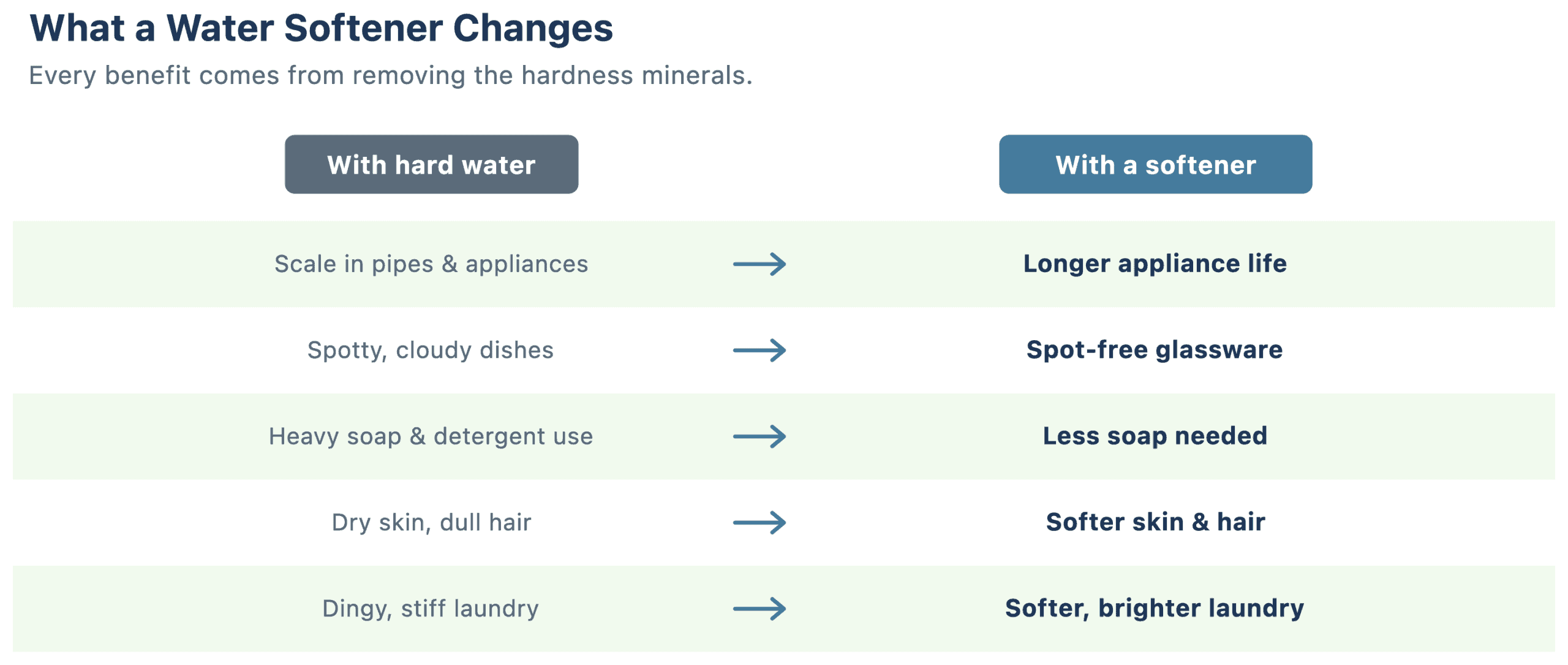
Every benefit of a water softener traces back to one thing: it removes the calcium and magnesium that make water "hard." Take those minerals out and the problems hard water causes go away. You get appliances and plumbing that last longer and run more efficiently because scale no longer builds up inside them, cleaner dishes and spot-free glassware, noticeably less soap and detergent needed, softer skin and hair, and softer, brighter laundry.
The main tradeoff is that softening adds a small amount of sodium and requires salt and a bit of upkeep. For homes with hard water, though, the upsides are tangible and show up all over the house. Here they are in detail.
Longer-Lasting, More Efficient Appliances
This is the benefit that saves you the most money. In hard water, dissolved minerals precipitate out as scale and coat the insides of pipes, water heaters, dishwashers, and washing machines. The University of Nebraska Extension notes that scale buildup in a water heater "can then slow the heating process and increase energy usage," so your appliances work harder and wear out sooner.
A softener removes the minerals before they can form that scale. The Minnesota Department of Health lists among softening's benefits that it prevents scale on pipes and fixtures and "lengthens the lifespan of some appliances." Less scale means a water heater that runs at its rated efficiency and appliances that reach their full service life, which is real money over the years, especially for scale-sensitive equipment like tankless water heaters.
Cleaner Dishes and Spot-Free Glassware
Hard water leaves spots and film. As the Nebraska Extension puts it, "glassware may become spotted as it dries," and "films may be left on shower doors or curtains, walls, and tubs." Softened water rinses clean, so the Minnesota Department of Health credits softeners with reducing "glassware spots." Your dishes come out of the dishwasher clear instead of cloudy, and your shower glass and tile stay free of that chalky film.
Less Soap and Detergent
Hard water fights your soap. The minerals react with soap to form scum instead of lather, which is why, as the Nebraska Extension explains, "cleaning agents used with hard water are not able to completely remove dirt." You end up using more soap, shampoo, and detergent to get the same result. With soft water, soap lathers freely and works fully, so you use less of it and get cleaner results, and the Minnesota Department of Health notes softening "reduces soap films and detergent curds in sinks, bathtubs, and washing machines."
Softer Skin and Hair
If your skin feels dry or your hair looks dull after a shower, hard water may be the reason. The mineral-and-soap scum doesn't rinse away cleanly and can leave a residue. The Nebraska Extension notes "hair washed in hard water may look dull and not feel clean." Many people find that softened water rinses more completely, leaving skin and hair feeling smoother, part of the classic "soft water" feel.
Softer, Brighter Laundry
Hard water is hard on clothes. The Nebraska Extension notes that with hard water, "clothes may become dingy and gray with time and feel harsh or scratchy." Softened water lets detergent do its job, so laundry comes out softer, brighter, and less stiff, while using less detergent to get there.
The Tradeoffs to Know
Softening isn't free of downsides, and being honest about them is only fair:
- It adds sodium. Ion exchange swaps the hardness minerals for sodium, a small amount that matters mainly for people on sodium-restricted diets. We cover this fully in is softened water safe to drink.
- It needs salt and upkeep. You buy softener salt and do periodic maintenance. (If you want to avoid salt entirely, a salt-free conditioner reduces scale but doesn't truly soften, see water softener vs salt-free.)
- It doesn't purify your water. Softening removes hardness, not contaminants. For drinking-water quality, you want a filter or reverse osmosis, compared in reverse osmosis vs a water softener.
Is a Softener Worth It for You?
The benefits are biggest when your water is genuinely hard, so start by knowing your number. Test your water hardness, and if it lands in the hard-to-very-hard range and you're seeing scale, spots, or stiff laundry, a softener will pay off across your whole house. Our guides to whether you need a water softener and the best water softeners walk through the decision and the options.
Disclosure: This article is informational and not personalized medical advice. World Water Reserve may earn a commission from qualifying purchases made through links on this page, at no extra cost to you.
Key Takeaways
- A water softener's benefits all come from removing the calcium and magnesium that make water hard.
- It prevents scale, so appliances and water heaters last longer and run more efficiently, the biggest money-saver.
- Dishes and glassware come out spot-free, and shower glass and tile stay free of chalky film.
- Soap and detergent lather fully in soft water, so you use less and clean better.
- Many people find softened water leaves skin and hair feeling softer and laundry brighter and less stiff.
- The tradeoffs: softening adds a little sodium, needs salt and upkeep, and does not purify your drinking water.
- The benefits are greatest with genuinely hard water, so test your hardness before deciding.
Share this post!